Tuesday, May 14, 2019

Seth Bullock on the Trail of Stagecoach Robbers.


In my prior two posts (#I and #II), I looked at the historical personae that correspond to the fictional characters who appear in the television show Deadwood and then presented  accounts of their deeds from contemporary newspapers. While saloon owner Swearengen was a tough SOB, Sheriff Bullock was described as tough and uncorruptable.


This shows the Black Hills area surrounding Deadwood. Deadwood and Lead City are highlighted. The state border with Wyoming (YO) is on the left. This map is from 1886.
John Manning, a minor character on the television show, led the caravan of settlers that brought Seth Bullock to Deadwood. In 1878, Manning was sheriff of Lead City, several miles southwest of Deadwood. In 1878, Manning ran against Bullock for Lawrence county sheriff. A.W. Merrick and the Black Hills Daily Pioneer were clearly in favor of Bullock as they show in the story of a gang who waylaid the local milkman.

Black Hills Daily Pioneer, Sunday October 27, 1878, p. 4.


Manning and Bullock After Road Agents.

It is no doubt not altogether banished from the minds of our readers, the puerile chase of Sheriff Manning after the cutthroats that but a short time ago bound the milkman Anderson to a tree, about eight miles from this city, robbed him of what money he possessed, ransacked his house, took his horses, and made good their escape. The sheriff in person pursued according to our gentleman who witnessed the whole proceeding, in a manner best calculated to aid the escape of the robbers. He left Deadwood with a flourish of trumpets and clang of arms, and at Rapid city disclosed his entire plan of action to a person at the hotel in the hearing of one of the very men he was looking for. Sheriff Manning claims he was within two miles of his game, but was given away by a ranchman, and the party escaped. On the other hand, the ranchman says he informed the officers where the robber's camp was, and offered to conduct Manning to the place, but the latter would not go. The ranchman then offered to go if accompanied by a soldier, of whom the sheriff had fourteen, and was again refused. He then dared the sheriff to follow him alone, to be again ignored, and to-day the outlaws are free.

Contrasted with this conduct is the cautious, brave manner in which Seth Bullock hunted down such game one year ago, as well as the course adopted in the late pursuit. Caution, discretion and bravery were called into use, with success. To-day the people of the Black Hills owe Seth Bullock a debt of gratitude for ridding the highway of robbers, capturing five, and securing nearly all the property lost.

---

A month before this, the Deadwood to Cheyenne stage was robbed and the Black Hills Pioneer breathlessly followed Bullock and his posses' pursuit of the pilfering perpetrators.

Black Hills Daily Pioneer, Sunday September 29, 1878, p. 3.

$5,000 Reward.

The Cheyenne & Black Hills Stage Company offer the above reward for the arrest and conviction of all of the highwaymen who robbed the "Treasure Coach" of said company on the 26th inst., at Canyon Springs, and the recovery of all treasure taken from said coach, amounting to $25,000; or $500 apiece will be paid for the arrest and conviction of each of said highwaymen, and $2,500 for the recovery of the treasure taken, or pro rata for any portion of the same recovered.


CHEYENNE & B.H. STAGE Co.
Deadwood, Sept. 27, 1878   87tf

---

The chase played out over the next week.

First, in that same day's paper:

Black Hills Daily Pioneer, Sunday September 29, 1878, p. 4.

ON THE TRAIL

The Robbers Making Toward Rapid.

They Purchase an Outfit on Slate Creek, Paying Two Hundred Fifty Dollars.

The following dispatch was received last evening by Mr. J. T. Gilmer, one of the proprietors of the Cheyenne & Blacks Hills stage line:

    CUSTER CITY, D.T., Sept. 28.

We have struck what we think is the trail at Hill City. Ward is there now. The robbers purchased a wagon yesterday, and are making towards Rapid. We take the trail again at daylight.

They have a dead-axle wagon, two ponies, one gray with bald face, the other dun or roan. They bought the outfit at Slate creek.

Notify all along the Sidney line, and order fresh stock for us at Rapid. Send Davis or May to meet us at Rockerville or Rapid. Our stock is run down. The robbers paid two hundred and fifty dollars for their outfit, half in dust.

BULLOCK.
---

Black Hills Daily Pioneer, Wednesday October 2, 1878, p. 4.

THE PURSUIT

The Robbers Only Twenty Miles Ahead at Last Accounts.

Deputy Sheriff Smith, of Pennington county, arrived on last evening's Sidney coach. He says a squad of soldiers, arrived at Rapid City as witnesses, report meeting a wagon Sunday evening containing two men, one driving, the other lying upon the bottom of the vehicle with a rifle resting across his breast. About twenty miles nearer Rapid the soldiers encountered the Seth Bullock party. This was at six o'clock Monday morning and eighteen miles from Rapid, where the party camped the night before. The team was being driven rapidly, a portion of the time in the road and at other times over the bluffs and across the prairie toward Pierre. The pursuers are, it is thought not more than twenty miles behind their game and a full day in which to catch up. It is said that the only chance for escape is by appropriating one of the many boats at the crossing of the Cheyenne river and sail down it. It runs so fast the no horse could keep pace. The citizen upon the trail number at least twenty and all well armed. [Another report said the posse was fifteen.]

The horses found near Slate creek arrived in town last evening, and word was sent to S.M. Booth, Custer [city], as one of the animals is thought to be his.

The Scott Davis party, which are giving chase in the direction of Fort Fetterman, have with them McHenry, alias Burroughs, and they have informed him that he must place them on the right trail or swing. [They captured one of the perpetrators McHenry and, if he didn't cooperate, he would be hanged.]

It is thought that the branch of the gang carrying the stolen gold, a bulk of over one hundred pounds, are going in that direction, and it is stated that they stole a mule from a ranch and packed the plunder upon it, in presence of the lady living at the ranch, departing westward.

---

Meanwhile, Sheriff Manning, who was not a part of the posses, had problems of his own.

Black Hills Daily Pioneer, Wednesday October 2, 1878, p. 4.

ATTEMPT TO ASSASSINATE SHERIFF MANNING.

A Narrow Escape from Death on the Lead City Road.

Sheriff Manning was in Lead City yesterday, gathering points relative to a case (the nature of which is required to be kept secret) until quite late in the afternoon, when he started upon his return, selecting the road down Gold Run. At a point soon after entering the woods a shot was fired which caused his horse, probably from fright, to stumble. Scarcely had he jerked the animal to his feet when a second report was heard, the bullet passing into the saddle in front on the left side. The sheriff thinks a pistol was used and that the shooter was but a few feet distant. It is thought the attempt was made by one of the parties against whom the sheriff had been endeavoring to obtain evidence and having succeeded too well, as the culprit probably thought he undertook to put the officer out of the way. Mr. Harlow, of Rapid, was on the road about one half mile below, walking toward Lead, when Manning came flying down the thoroughfare and insisted that Mr. Harlou [sic] should proceed no further.

---

With the appearance of a female conspirator, the plot thickens.

Black Hills Daily Pioneer, Thursday October 3, 1878, p. 3.

THE PURSUIT
Tony Pastor and Lew Hagar Captured.

Seth Bullock only eight hours behind his game.

The Cheyenne coach last evening brought in Deputy Sheriff Noah Siever and J.J. Argue, and Tony Pastor and Lew Hagar, who were arrested by the former at the ranch of the latter, on Cheyenne river, sixty miles below the crossing. The information of suspicion against them has not been made public. The officers proceeded to the ranch Monday night, and effected the arrest of Hagar, and in the morning, when Pastor came for his breakfast captured him. The twain protested they were strangers to each other, but a man who was with Siever knew better, and Tony had to accept the alternative.

Tony Pastor is a hard case and no stranger to Deadwood police courts. Our readers will remember his arrest about one year ago for horse stealing, and his appearance before Justice Burke, who granted a change of venue to Hayward, in Custer county, which resulted in his discharge. When arrested at that time he had $114 in greenbacks and a terrifying assortment of knives and pistols upon his person.

Quite a prominent woman in the road agent circle, Mrs. Ogden, who has a ranch and log cabin four miles from the stockade, Tuesday packed her earthly possessions and returned to Spearfish, her former place of residence. It is altogether probably that the citizens of the Cheyenne river valley invited the old lady to change her haunts, as it is alleged she has harbored the worst possible classes for the past year. It is also asserted that Burroughs, the captured robber, is her husband, but lawful o [sic] unlawful is not ascertained. An incident in connection with these two worthies may be worthy of note: Burroughs was arrested at her place in the afternoon and taken to the stockade, and in the evening the old lady came rushing up, out of breath and wild with terror, because two masked men had robbed her, and requested that the messengers return to the cabin with her. They of course refused to accede, and she remained until quite late. Before she had departed, however, her son, a chip off the old block, rode to the stockade, but was stopped by a hostler, who, cocking his rifle, commanded the youth to a halt. Both struck out for home a few moments later. It was conjectured she was endeavoring to release Burroughs. A daughter of the dame, a woman of ill-repute, visited her a few days before she packed up and left for Spearfish.

The Bullock party were heard from last evening by means of the Indian interpreter, Fielding, who arrived at Rapid City yesterday. He was interviewed there by Capt. Williard. He reported having met the dead-axle wagon at Pinau Springs, and the Bullock party eight miles behind. The stock attached to the vehicle was about exhausted, while the pursuers are yet well mounted. After leaving the Springs no hiding place occurs, the road thence to For Pierre leading across an open prairie, leaving scarcely a shadow of a chance for escape, and probably ere this the wagon and its occupants are in the camp of the pursuers.

Black Hills Daily Pioneer, Friday October 4, 1878, p. 4.


ON THE TRAIL.

Good News from Seth Bullock's Party --- The Villains Are Still Being Pursued and, by This Time, Are Probably Captured.

From Seth Bullock, who went on the trail of the road agents that robbed the Cheyenne treasure coach at Canon Springs station, we obtain the following:

The robber's trail was struck at Newton City and bore in the direction of Rapid City. After ascertaining that the robbers would go near that point, word was sent to Col. Ed Cook to organize a party of determine men and make an attempt to capture them, if possible, before they reached the Cheyenne river, and also to secure fresh horses for him upon his arrival there so as to have no delay in following up the trail.

Unfortunately, when Bullock's party reached Rapid, all the available fresh stock in the neighborhood had been secured and taken off with Cook's party, thereby placing him in the awkward dilemma of either proceeding on their already tired horses or giving up the chase. He finally concluded to continue upon the trail and try, if possible to come up with the thieves before their horses became useless.

After traveling some distance, they came up with Cook's party, who it seems, had lost the trail. After a short hunt the trail was discovered, when the entire party, now increased to a good sized squad under the leadership of Cook, started again on the hunt. As the road agents were urging their stock to the utmost, they kept well ahead of the pursuers, who, upon their utterly fagged stock, saw that it would be almost impossible to overhaul them, secured a good mule team, and leaving their stock to recuperate, made a run during the night, expecting to pass the road agents in the darkness, and waite [sic] for them to come up on the following morning, when they could easily be captured.

This plan would have succeeded most likely, had it been properly stuck to, but during the night ride they passed the robber camp nearer than they expected, and the neighing of one of the horses in their camp, which was but a short distance from the road, betrayed their whereabout to the pursuers, who immediately halted and held a consultation as to the best mode of securing their game. Cook, who the leader, decided to scout around the camp, and if possible hit upon some means to secure them, if they were the party he was seeking.

After a short absence he returned with the information that they were the men he was after, and proposed a plan to secure them. His suggestions not meeting with general favor, Bullock made a proposition to the effect that it would be better to surround their camp and kill their horses, thus placing them on foot and in the power of the officers. Cook overruled his suggestions and decided to place the men at various points around their camp and wait until morning. This was done.

In the morning when they came to look for the robbers neither hide nor hair of them or their horses was visible, they having slid out during the night. As soon as this fact was sufficiently elucidated to the leader he ordered the party to repair to the nearest station and procure fresh stock to continue the chase. Six horses were all that could be obtained for the party.

Those who had luckily secured the fresh horses continued the chase, while Messrs. Bullock, Beaman and Steele returned to their jaded horses and struck out for home. Mr. Bullock is confident that ere this the robbers have been captured and that they are the men who are implicated in the coach robbery.

On their return to Rapid, a man was arrested there and placed in the Pennington county jail, who answers exactly the description of one of the outlaws.

It is to be hoped that the party have been successful and their object attain, of ridding the country of one of the worst and most desperate gangs of outlaws that have ever infected it.
----
Although this sounds like Cook usurped Bullock in running down the stage coach robbers, a follow-up report on October 12 said that Bullock captured a wagon that the perpetrators had abandoned and that the gold was found nearby, although not by Bullock. No mention was made of how the reward was split.


The South Dakota portion of the Dakota Territories, 1876. The Black Hills are at the far left. Deadwood is not yet named. The Sioux land from the treaty of 1868 makes up the left two-thirds of the area of this map, an impressive tract until the buffalo were slaughtered, the tribes were starved and the land taken away.


Up Next: 1876 in Deadwood.


Wednesday, May 8, 2019

Sheriff Seth Bullock in old Deadwood Newspapers


In yesterday's post, I looked at the historical figures who correspond to the characters in the HBO series, Deadwood. I also presented some news articles regarding the real Al Swearengen.

Today, I will focus on Sheriff Seth Bullock. Bullock was a somewhat famous character of his time and there are about ten times as many articles in which he appears than does Swearengen.

Seth Bullock had that Eastwood-type stare. (Photo from 1893)


Bismarck Tribune, Wednesday, July 19, 1876, p. 5.

OFF FOR DEADWOOD

A Party of Two Hundred and Fifty and One Hundred Team Leave for the Hills.

The largest party which has ever left Bismarck for the Black Hills crossed the river Saturday and Monday and took up its line of march Wednesday morning for the land of golden nuggets. The party consists of one hundred wagons of which we have an account and several of which we have not, and about two hundred and fifty men, the names of whom we give below, so far as we could obtain them. The wagons are all heavily loaded ranging from twenty-five hundred to forty-five hundred lbs.; the men are well-armed and woe be unto any party of less than a thousand Indians that should attempt to test their mettle.

[cutting out some lists of names]

Manning's party of fifteen Montanians should be added to this and a party of ninety-six Montanians who arrived by the Carroll Monday afternoon. Among this party we notice ex-sheriff Bullock, of Helena, Mr. Star, former Receiver of the U.S. Land Office at Helena, Mr. Carter and other prominent citizens. Bullock & Star will establish themselves at Crook City handling crockery, etc., principally. Mr. Carter will establish a wholesale liquor house. Sheriff Bullock says these Montanians have not taken any stock in newspaper reports but are satisfied as to the value of the Black Hills mines from the report of men they know and in whom they have confidence. Mr. Bullock says a party of one hundred or more will arrive from Montana enroute for the Black Hills of the Key West. He says not all are leaving Montana but large numbers are going to the Hills.


This ad began running in the Bismarck Tribune from July 26, 1876 and continued for eleven months. Star received first billing.
Bismarck Daily Tribune, Friday, Aug 17, 1877, p. 2.


This article paints a nice contemporary picture of the Black Hills and its people, including Calamity Jane and Seth Bullock.

BLACK HILLS

A final Clean up -- Personal and Other Paragraphs -- Politicians and Other Characters in the Hills -- Newspapers, Hotels, etc.

Editorial Correspondence.

CROOK CITY, Aug. 11 -- In my last [sic] I tried to give something of an idea of the country between Bismarck and the Hills, something of Crook City and its surroundings together with such points of interest as were suggested while preparing hurriedly my communications. In my first letter I undertook to give an idea of the mines. I shall now 


"WORK THE TAILINGS,"
as they say in the mines, and clean up for the present my Black Hills work, referring for the first time to my notebook, which is full of all sorts of memorandums.
 

THE CLIMATE
of the Hills is delightful. The days are warm but not oppressive, in summer, while the nights are cool. In winter the snow is not deep and the gulches are partially protected from the heavy winds by the hills and timber.


THE WATER
is generally good but much of it is impregnated with mineral. Most of the streams are used for mining purposes, and the water, of course, is muddy and unfit for other purposes. Water can be obtained at almost any point by digging or drifting into the hill sides.
 

SOCIETY
is mixed and you will find occasionly [sic] a high toned citizen tripping the light fantastic in the hurdy gurdy with Can Can Dolly, Calamity Jane or some other "character" in the Hills as a partner. Can Can Dolly, by the way, is a good looking woman of about twenty. "I saw her but a moment." Having proposed to "kick your hat off for the drinks," a fellow six foot four accepted the wager and she was engaged in that pleasant pastime.
 

CALAMITY JANE
is married now and was living comfortably on a ranche with her husband, but the fire fiend came and destroyed their all and Jane returned to the Hills and, now, like the ballet girl Prentice, speaks of in the Louisville Journal, she waltzes on one leg and polkas on the other (in the hurdy gurdy dances) and between the two she gets her living. Jane is not very bad and has many interesting features. Left in a Mormon camp without father or mother when a mere child like Topsey, she "growed just like the corn." Her associates having been rough she has been rough. But I never met a person more readily brought to tears by kind words or gentle reproof for evil deeds. At first a waif in a Mormon camp, then she passed through the mining excitements in the west, now a prostitute, now striving to mend her ways, then a scout wearing men's clothes for General Crook, then the lioness of the hills, afterward a devoted wife, then forced by circumstances to return to her old mode of life because she knew no other, she deserves kind words rather than reproach. The Hills are full of
 

CHARACTERS,
male as well as female. The female gambler and the male prostitute. The innocent boys and the gentlemanly road agent. The man who would cut your throat for a few dollars or the gentlemanly fellow would roap [sic] you into bunko or other games and call it a square thing to whack up with you from your own means, and yet law and order prevails and life and property is secure to those who attend to their own legitimate business.
 

MORE MURDERS
occurred in the town of Bismarck during the first two years of its existence than has occurred in all the towns of the Black Hills.
Speaking of the characters in the Hills we must not forget
 

THE POLITICIANS
We find them of every grade. The brilliant and wealthy Spencer, U.S. Senator, from Alabama has taken up his abode here, and though he still retains his position in the Senate, we will be greatly surprised if he does not figure largely in the politics of Dakota a few years hence. The brilliant Burleigh is also here, and while he is now paying strict attention to business, his friends will surely urge him for public position. Clagget of Montana, the silver-tongued orator of the West, Steel of Wyoming, and other ex-members of Congress, are on the ground. Deadwood has sixty odd lawyers and several doctors, some of whom are known to hanker for glory in the political field. The Governor, unwisely we think, filled all of the county offices in the Hills from outside polititians [sic] with one exception,


SETH BULLOCK
sheriff at Deadwood, and though his appointees were good men, Bullock is probably the only one of them who will be sustained by the people, or who will stand any chance for re-election. Bullock is a good one. He has the nerve and experience, is above reproach, and personally popular, no better man could be found in the whole territory for the position he occupies. Seth does not deserve to be classed among the politicians, however, but among the business men of the Hills, for he is old bnsiness [sic] whereever [sic] you find him, whether in the discharge of official duties or as an active go-ahead merchant.


[The above article goes on at length to include several more profiles of Deadwood personalities, including newspaperman A. W. Merrick.]

Black Hills Daily Times, Friday, November 23, 1877, p. 2.

[When the owner of a mine refused to pay his workers their wages, the miners seized the mine and began a stand-off. The protestors claimed that they loaded the mine with explosives. Bullock, with the backing of the U.S. Military, sought to put an end to the situation.]

Keets War Ended

About 9 o'clo k [sic] last night, the last of the miners who had forcible possession of the Keets mine, came out and surrender to Sheriff Bullock and men, conveyed to the jail in Deadwood and locked up, to await the action of the proper authorities.
The sheriff is deserving of much credit for the lenient and masterly manner in which he handled the difficult. That the majesty of the law must be sustained at all hazard, is the unqualified opinion of all sound thinking men, although their [sic] is a sympathetic feeling existing strongly in favor of the miners being paid their hard earned wages. Still, the community at large, do not countenance any unlawful means to procur [sic] the same. Our report er went early this morning to the Keets mine. Through the kindness of Mr. Thompson, one of the guards, procured access to the mine, in company with a guide, each taking a candle. They made a thorough examination, as it had been reported that the mine had been charged preparitory [sic] to being blow up. Nothing was found  which indicated such intention. At the entrance, the bottom of the tunnel was covered with water, which produced a wet, mushy, and obnoxious smell, which pervade the whole cavern. These men had lived in for seventeen days. The amount of provisions found, was two cans of coffee and about two hundred weight of flour; no butter, meat or wood.
There were eight men in the mine yesterday afternoon, of which number Messrs. J. Jenkins, W. H. Maxwell, and R. H. Hocks came out yesterday afternoon, and S. Long, T. Butler, W. Dobson, A. G. McCarty, P. Lynch, emerged last night at nine p.m. The whole party were lodged in jail, and will have a hearing before Justice Dawson to-morrow morning.
The mine is now in possession of the owners and work was begun under their orders this morning. Lieutenant Edgerly and his command have departed for the scene of Indian hostilities.


Black Hills Weekly Pioneer, November 2, 1878, p. 1.

[Reelection time for Bullock.]

SHERIFF OF LAWRENCE COUNTY

The time is fast approaching when the official canvass of votes will again decide whether Seth Bullock or John Manning shall hold the important office of sheriff. Comparisons are always odious, and we shall therefore avoid them during this campaign; but we desire to call the attention of the voters who are about to cast their ballots in the coming election to some of the many reasons why Seth Bullock should receive their votes: In the first place, Mr. Bullock's qualifications for the office are patent to all, as his former incumbency has given every one an opportunity of judging for himself. As an officer of strict integrity, unvarying attention to business, and the impartial discharge of his official duties, Seth Bullock stands the peer of any man in a similar position in any community. This office is the most important one in this county, and should be filled by a man of cool and determined nerve, of good judgment, and unbiassed [sic] opinions. Where can a man be found who possesses the above quality in a more perfect degree than Seth Bullock? His long experience in discharging the duties of the office, both in Montana and Dakota, render him entirely competent and equal to any emergency. He is most undoubtedly the right man in the right place when in that official capacity, and should he meet with that success he deserves, will make good his promise that the power and majesty of the law shall become a terror to evil doers in Lawrence County.


Bismarck Tribune, Saturday, August 23, 1879, p. 5.

[Sometimes Bullock was up against stone-cold fowl.]

Killed in Self Defense
 
[Deadwood Times.]


Seth Bullock, who returned to town the other day with a string of prairie chickens, said he kill them in self defense, that while crossing a secion of valley land a large covey of the savage birds attacked himself and dog, and he was obliged to handle his gun lively in self protection. Young prairie chickens are very ferocious in the Black Hills country, especially before the 15th of August, and those killed before that date are killed only in self defense.


Next up: Seth Bullock and the highwaymen.


Tuesday, May 7, 2019

Deadwood, The Series and the Contemporary News Accounts


The television series Deadwood ran from 2004-6 on HBO for thirty-six episodes.

A special movie which reunites much of the original cast which debuted on HBO on May 31, 2019. Set ten years after the events in the series, it will look at the fortunes of the various characters.

In this and subsequent posts, I will present old newspaper articles involving the historical characters in Deadwood.
The series Deadwood was known for several things:


  1. Richly realized characters.
  2. Brilliant acting and propulsive writing.
  3. A crazy amount of things going on at any one moment.
  4. Poetic swearing.
  5. More swearing.
  6. Swearengen.


Many of the prominent characters in Deadwood existed in real life.


Ellis Alfred "Al" Swearengen first ran an establishment called the Cricket Saloon and then opened a brothel/saloon/dance hall called the Gem Theater. He came to Deadwood with his wife, but they soon divorced. He married two more times. His name is spelled Swearingen in about half of the newspaper articles. No known photos.

Seth Bullock was a legendary lawman, who among other things, helped establish Yellowstone National Park. He began a hardware store with Sol Star, who was also featured in the series. Star later went into politics.


Seth Bullock
Sol Star

Ethan Bennet Farnum was the first mayor of Deadwood. Unlike the weaselly character in the series, he headed the school board, instituted the fire department, and served as Justice of the Peace and judge. He had a wife and three children.
E.B Farnum, middle, back row.

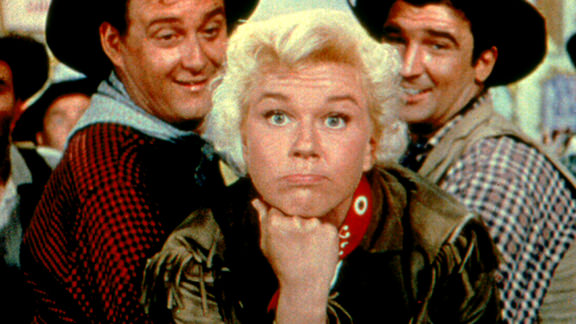
Martha Jane Canary, i.e., "Calamity Jane" achieved her fame in her later years as part of Buffalo Bill's Wild West Show. A notorious alcoholic she was usually portrayed by glamorous movie stars, including Doris Day in the film, Calamity Jane.
Calamity Jane, later years
Doris Day (r.i.p.) as Calamity Jane
James Butler "Wild Bill" Hickok and his partner Charlie Utter appear in the series. Bullock arrived in Deadwood the day when Hickok was shot dead by Jack McCall.

Arapahoe Joe (left) and Charlie Utter (right) at the grave of Wild Bill.

Albert Walter Merrick published Deadwood's first paper, the Black Hills Weekly Pioneer which continues to this day.
A. W. Merrick, newsman

George Hearst, the founder of the Hearst family empire, was, in the 1870s, one of the wealthiest men in America from previous mining claims.

George Hearst

The Reverend Henry Weston Smith did die in the summer of the first year of Deadwood's existence. He did not have a brain tumor as did the character in the program. He was murdered.
Reverend Henry Weston Smith


Some characters in the series are wholly fictional including Alma Garret. Some are composites of historical personae such as Doc Cochran and Trixie, while others are loosely based on individuals with different names, including Joanie Stubbs and Cy Tolliver. Hearst did not have a psychotic geologist.


Background.


In July of 1874, General George Armstrong Custer, two years before his death, entered land deeded to the Lakota tribe and declared he had found gold. This led to a small invasion of gold-seekers. At first the U.S. Government worked to keep out the invaders, hoping to first negotiate a treaty with the Lakotas in September of 1875. The negotiations fell through and the government threw up their hands in regards to keeping out prospectors.

In late 1875, gold was discovered in the area near where Deadwood was founded. Further investigation found the gold to be in a rich supply. In January, 1876, forty claims were staked out.

In April, 1876, the city of Deadwood was founded out of the camps. Almost immediately the town swelled to 5,000 inhabitants.

On June 8, 1876, A.W. Merrick founded the Black Hills Weekly Pioneer. Also during that summer Swearengen opened his first saloon.

On June 25, 1876, the Lakota Sioux tribe defeated and killed General Custer and 268 of his soldiers.

On August 2, 1876 Seth Bullock and Sol Star arrived in town. That same day, Hickok was shot and killed.

On February 28, 1877, in the Manypenny Agreement, the Lakota Sioux officially lost the land. This was litigated until 1980 when the Supreme Court decided the Sioux had not been given just compensation. They refused a recalculated compensation, saying they wanted the land back.

On September 26, 1879 a fire broke out which destroyed 300 buildings including the Gem Saloon.


There are many excellent sites regarding Deadwood history.

Newspaper articles from Deadwood Pioneer.

The newspaper articles I've found from Deadwood in the 1870s jibe with the town as presented in the series. A sampling of Swearengen.


Black Hills Daily Pioneer, Tuesday June 25, 1878, p. 4.


Thomas Clark, a former miner in the Old Abe, last evening becoming abusive in the Gem dance hall, was thrown out by the proprietor, Al. Swearengen, and his head and face considerably bruised. Parties in the hall at the time say Clark went away and procured a pistol and told Swearengen to heel himself. A large pistol was found upon him. Swearengen gave his own recognizance for $250 to appear this morning.


Al Swearengen seemed to inevitably have the name Al spelled with a period, i.e., Al. Swearengen. Three days later, the above-mentioned case was dismissed.

Black Hills Daily Pioneer, Friday, June 28, 1878, p. 4.

Justice Barker's Little Mill.

The case of assault against Al. Swearengen was dismissed, no prosecutor appearing.

Campbell and Darling, alleged crooked beef eaters, next toed the scratch and, the former was ruled off, no evidence appearing; but Dick Simmons ("Deaf Dick,") swore that Darling had told him he had burned up the hides and would shoot him if he blowed; hence, the judge bound him in the sum of five hundred dollars to appear at the district court.

Murray, the colored shootist, waived examination and Henry Walker and Lewis Curtis going his bond for one thousand dollars, he was released to appear before the district court.

(beef eater: moocher, in this case probably stole someone's cow.) (toed the scratch: stood before the judge)


Black Hills Daily Pioneer, Saturday, July 20, 1878, p. 4.

Al. Swearengen is building a place near [military] Camp Bare Butte.
Six nymphs de terpsichore will be taken out to-day, and more will follow if the boys in blue appreciate dancing.

A man playing at one of the faro games in Morton's club house yesterday became possessed of the idea some one had cheated him, and made a fuss, whereupon the dealer placed the business end of a six shooter at his ear. That settled the difficulty instanter.


Too bad they didn't have a headline: Nymphs of Terpsichore to Bare Butte.


More newspaper articles, part two.
Part three. 

Kelly Company, makers of metal detectors and all things for modern prospecting, have written an article regarding the Black Hills Gold Rush. 

Tuesday, March 5, 2019

The Funniest Word in English


Even outside his plays, Neil Simon put forward the proposition that some words were funnier than others. A summation of this idea appears in a monologue in The Sunshine Boys.

Willy Clark:

Fifty-seven years in this business, you learn a few things. You know what words are funny and which words are not funny. Alka Seltzer is funny. You say 'Alka Seltzer' you get a laugh … Words with 'k' in them are funny. Casey Stengel, that's a funny name. Robert Taylor is not funny. Cupcake is funny. Tomato is not funny. Cookie is funny. Cucumber is funny. Car keys. Cleveland … Cleveland is funny. Maryland is not funny. Then, there's chicken. Chicken is funny. Pickle is funny. Cab is funny. Cockroach is funny – not if you get 'em, only if you say 'em.


He's saying that the "K" sound is funny, since I assume the character was not so poor at spelling. From the above examples, several have multiple "K" sounds.

Bugs Bunny may agree with this "kuh" theory. The trains that took off in his cartoons had as their destination: Anaheim, Azusa, and Cucamonga. As Bugs explained when he became lost, somehow tunneling through to Antarctica or a Foreign Legion post in the Sahara: "I should have taken a left turn at Albuquerque."

Even as curmudgeonly a writer as George Mencken subscribed to the K theory, listing such towns as Kalamazoo and Keokuk. Mencken was also responsible for one of my favorite flights of words in his description of the inauguration speech of Warren G. Harding:

    "Setting aside a college professor or two and half a dozen dipsomaniacal newspaper reporters, he    [Harding] takes the first place in my Valhalla of literati. That is to say, he writes the worst English I have even encountered. It reminds me of a string of wet sponges; it reminds me of tattered washing on the line; it reminds me of stale bean soup, of college yells, of dogs barking idiotically through endless nights. It is so bad that a sort of grandeur creeps into it. It drags itself out of the dark abysm (I was about to write abscess!) of pish, and crawls insanely up the topmost pinnacle of posh. It is rumble and bumble. It is flap and doodle. It is balder and dash."

There I go, being anti-Harding. A bold choice in these divisive political days.

Neil Simon was one of a famous group of writers for the classic Sid Caesar Your Show of Shows (writers for Sid Caesar included Mel Brooks, Woody Allen, Carl Reiner, and Larry Gelbart). Those writers once came to the conclusion that the funniest number is 32. I would have gone with "gazillion," although 32 gazillion is damn fine.

Thomas Moore Devlin, writing for the linguistic journal, Babbel Magazine explored the subject of the funniest word. First he derived four rules for what makes a word funny.

    It should be an uncommon word.
    It should ideally have some kind of humorous use in the native language.
    It should have hard stops, especially "k" sounds.
    It should be a benign violation. [that is, it should be offensive or suggestive, but not very.]

From this he [somehow] came to the conclusion that the funniest word is "cucumber," one of the words that appeared on Willy Clark's list.

Long ago, I recall reading a magazine article on Monty Python coming to America. In this article the comedy troupe provided a longish list of words that are inherently funny. I remember not being stirred by most of them, but one did make me guffaw and stands out in my memory: batshit.

The word "batshit" no longer causes me to involuntarily laugh. Maybe it is overused, or maybe my tastes have changed. I think "guano" is funnier. On the other hand, I did chuckle when I read a political commentary that described our current state of affairs as bat-shittery. My own rule of what makes words funny: add an incongruous suffix like -ery or -orama. As Gordie commented in Stand By Me: "And Lardass just sat back and enjoyed what he'd created -- a complete and total barf-o-rama!"

This leads me to the conclusion that many of the funniest words are directed toward my inner adolescent.

Colonel "Bat" Guano from Dr. Strangelove. Played by Keenan Wynn whose father, Ed, famously said on his deathbed: "Dying is easy. Comedy is hard."

Robert Beard of alphadictionary.com assembled a list of the 100 funniest words in the English language which he published with commentary in a book he imaginatively titled, "The 100 Funniest Words in the English Language." (Amazon sends me to Amazon.UK for this book. Maybe it is not available in American.)

The entries are a personal selection which he presents in alphabetical order which offends my antialphabeticalmentarianist views. The first word is abibliophobia, the fear of running out of things to read. He does include all-time greats like argle-bargle, collywobbles, and brouhaha, the last of which has a built in laugh.

This site, which extends on Wikipedia's entry on Inherently Funny Words, has a number of additional takes on different approaches to the funniest words as they appear in fiction.

George Carlin is cited as saying "kumquats," "garbanzos," "guacamole," and "succotash" have names that makes them too funny to eat.

Science to the Rescue

There are scientific studies into what is the funniest word because, of course, there are.

One study had a group of 821 English men and women rate approximately 5000 common words on a scale of 1 to 5, with five being the most humorous. The winning words?

Booty (4.32)
Tit (4.25) note: titmouse is inherently more funny than tit.
Booby (4.13)
Hooter (4.13)
Nitwit (4.03)
Twit (4)
Waddle (4)
Tinkle (3.94)
Bebop (3.93)
Egghead (3.92)
Ass (3.92)
Twerp (3.92)

Thankfully the study group recognized these two words were the least funny:

Rape (1.18) and Torture (1.26).

It should be noted that this study looked at the five thousand most common words, so kerfuffle was likely never a choice. Only tinkle had a K sound. A predominant theme was the dirty-but-not-too-dirty-word snort. As School Superintendent Chalmers on the Simpsons once said: Now if you'll excuse me, I'm off to my vacation at Lake Titicaca. Try to make a joke out of that, Mr. Smart Guy.

The people studying artificial intelligence are trying to make computers funny. In their journals are a number of studies looking at funny words. One such study performed a crowd-source review of 120,000 English words and "phrases." The phrases they list are word pairs like namby pamby or woo woo. It took English speakers from all over the word, with a fair number from India.

Of course each individual didn't rate 120,000 words. The words were divided up in chunks, rated and the top 216 were examined. From there, the funniest were selected.

The funniest words? 

1. asshattery
2. clusterfuck
3. douchebaggery
4. poppycock
5. craptacular
6. cockamamie
7. gobbledegook
8. nincompoops
9. wanker
10. kerfuffle
11. cockle pickers
12. pussyfooting
13. tiddlywinks
14. higgledy piggledy
15. kumquats
16. boondoggle
17. doohickey
18. annus horribilis
19. codswallop
20. shuttlecock

Fourteen of these have K sounds. Seven have multiple K sounds. My personal choice for funniest word is kerfuffle. The complete list of 216 finalists is included below.


I'll end with this tangential anecdote. Once in my pharmacology class, I thought I'd perform an ice-breaker. I asked students to write down their favorite name for a body part. For example, euphonic words like uvula, or my favorite: the zonules of Zinn. Reading through the selections I came across one answer that I accidentally read out loud before editing: my clitoris. At first I thought, this is a male student having a snickering joke at my expense. I reminded the students that the exercise was not about your favorite body part, just your favorite word naming a body part. Then a female student raised her hand and announced, "That was me. I really like my clitoris."


The complete 216 word list mentioned above in descending order:

asshattery, clusterfuck, douchebaggery, poppycock, craptacular, cockamamie, gobbledegook, nincompoops, wanker, kerfuffle, cockle pickers, pussyfooting, tiddlywinks, higgledy piggledy, kumquats, boondoggle, doohickey, annus horribilis, codswallop, shuttlecock, bejeezus, bamboozle, whakapapa, artsy fartsy, pooper scoopers, fugly, dunderheaded, dongles, didgeridoo, dickering, bacon butties, woolly buggers, pooch punt, twaddle, dabbawalas, goober, apeshit, nut butters, hoity toity, glockenspiel, diktats, mollycoddling, pussy willows, bupkis, tighty whities, nut flush, namby pamby, bugaboos, hullaballoo, hoo hah, crapola, jerkbaits, batshit, schnitzels, sexual napalm, arseholes, buffoonery, lollygag, weenies, twat, diddling, cockapoo, boob tube, galumphing, ramrodded, schlubby, poobahs, dickheads, fufu, nutjobs, skedaddle, crack whore, dingbat, bitch slap, razzmatazz, wazoo, schmuck, cock ups, boobies, cummerbunds, stinkbait, gazumped, moobs, bushwhacked, dong, pickleball, rat ass, bootlickers, skivvies, belly putter, spelunking, faffing, spermatogenesis, butt cheeks, blue tits, monkeypox, cuckolded, wingnuts, muffed punt, ballyhoo, niggly, cocksure, oompah, trillion dong, shiitake, cockling, schlocky, portaloos, pupusas, thrust reverser, pooja, schmaltzy, wet noodle, piggeries, weaner, chokecherry, tchotchkes, titties, doodad, troglodyte, nookie, annulus, poo poo, semen samples, nutted, foppish, muumuu, poundage, drunken yobs, yabbies, chub, butt whipping, noobs, ham fisted, pee pee, woo woo, squeegee, flabbergasted, yadda yadda, dangdut, coxless pairs, twerps, tootsies, big honkin, porgies, dangly, guffawing, wussies, thingies, bunkum, wedgie, kooky, knuckleheads, nuttin, mofo, fishmonger, thwack, teats, peewee, cocking, wigwams, red wigglers, priggish, hoopla, poo, twanged, snog, pissy, poofy, newshole, dugong, goop, whacking, viagogo, chuppah, fruitcakes, caboose, cockfights, hippocampus, vindaloo, holeshot, hoodoo, clickety clack, backhoes, loofah, skink, party poopers, civvies, quibble, whizzy, gigolo, bunged, whupping, weevil, spliffs, toonie, gobby, infarct, chuffed, gassy, crotches, chits, proggy, doncha, yodelling, snazzy, fusarium, bitty, warbled, guppies, noshes, dodgems, lard, meerkats, lambast, chawl.


My most recent novel, The Missing Floor, is available in paperback and ebook form. It is the second in my Skyline Mysteries series, the first being Floor 24, available in paperback, ebook, and as an audiobook. 

A dead dame. A psychotic mobster. Alan and
Lorraine Priest seek clues to a murder among Prohibition
gangsters, corrupt police, and Broadway stars.


Martin Hill Ortiz is also the author of six novels, and numerous short stories and poems. He can be contacted at mdhillortiz@gmail.com.

Sunday, February 24, 2019

Writing Companions, Suitably Stuffed


A time-and-a-half ago I decided to buy some dolls representing famous figures. These were offered for sale at our local art museum gift shop. Along with satisfying my scientific side (Einstein), and my wife's artistic side (Da Vinci, Rembrandt, Van Gogh with a detachable ear, and Frida), I bought some literary luminaries including Shakespeare and Poe.

Right now Poe stares my way: his soulful sad eyes unblinking, a raven perched on his shoulder. I could initiate a staring contest, but maybe the raven is waiting for the opportunity to fly over and peck out my eyeballs, something Poe would approve of.

My modest collection inspired me to explore the world of literary figurines. In doing so, I have returned from my venture dizzied by the choices and coveting many of the wonderful creations. How has my writing survived without this plenitude of muses?

There is this Jane Austen action figure. It's poseable. Surely, Jane Kick-Ass Austin would inspire and transform my writing.

Jane Austen Action Figure
All the pride and 30% less prejudice!
The same company sells a Poe action figure, complete with raven on his shoulder, naturally.


On Etsy, the online shopping market for all that is artisan, CELEBRITYwithYOU sells this set of Agatha Christie and Hercule Poirot. I am not a clothing fiend, my general attitude is just find something in the closet that doesn't smell funky, but these dolls are worth the price for their costumes alone. They also make custom-made dolls to order, in case you want to inspire yourself with yourself.


The people (person?) at UneekDollDesigns, also an Etsy site, lists 175 male author and 69 female author dolls. They include a wide range of writers. Some examples:

Here is Dorothy L. Sayers.

I doubt that it took nine tailors to make her outfit.
It is difficult for me to hold back from screaming out: I need a Jorge Luis Borges doll and I need it now!

Labyrinth-ific!

In case you need warning against writing too florid of sentences, perhaps you need an Edward Bulwer-Lytton doll. Or maybe it's Rasputin.


 A dark and stormy doll.

Paul Coelho. I enjoyed his book: Meditations on Being a Gazillionaire.

The Poe doll that I own. Made by The Unemployed Philosophers Guild.

And that Raven never flitting, still is sitting, still is sitting,
On that woeful doll of Poe, full of cotton balls and gloom.
And its eyes, so darkly gleaming, held by stitches soon un-seaming,
While a teapot over-steaming, sounds its scream throughout the room,
And so imbued my squeamish dreaming thrills with chills from Usher's tomb.
Hill Ortiz - nom de plume.


Never Kill A Friend, Ransom Note Press

Never Kill A Friend is available for purchase in hard cover format and as an ebook.
The story follows Shelley Krieg, an African-American detective for the Washington DC Metro PD as she tries to undo a wrong which sent an innocent teenager to prison.

Hard cover: Amazon US
Kindle: Amazon US
Hard cover: Amazon UK
Kindle: Amazon UK
Barnes and Noble 

Martin Hill Ortiz is also the author of A Predator's Game. His epic poem, Two Mistakes, won second place in the Margaret Reid/Tom Howard Poetry Competition. He can be contacted at mdhillortiz@gmail.com.

Wednesday, December 5, 2018

The Tragedies of X, Y, and Z


With mathematical precision, the detective narrows down the list of potential suspects, placing each into a Venn diagram of motive, means, and opportunity, ultimately revealing the culprit.


          The notorious escape artist, famous for  telling detectives "Examine Your Zippers," and then fleeing while their attention is elsewhere,  is the culprit.

The subjects of this post matches the following three characteristics. They are two people who go by a singular name. They write mystery stories. Their name also happens to be the name of a prominent mystery magazine. There is only one pair of suspects who fits these descriptors: Ellery Queen.


(Alfred Hitchcock was a mystery writer via screen credits.)


Turning Venn diagrams into a lasso that also serves as a noose also happens to be the method by which Ellery Queen's detectives solve crimes.

Ellery Queen was or were the prolific writing duo of Frederic Dannay and Manfred Bennington Lee. Ellery Queen was also the name of their most-frequently-used detective (an early example of cross-marketing?) and the name of the mystery magazine that they started.

For me the joy of Ellery Queen mysteries are the small details of detection. Look, a letter in an envelope has the imprint of a paper clip on both sides while the envelope has a paper clip at one end. Did one paper clip disappear? No, then the envelope would also be marked at both ends. But, wait! The letter was taken from the envelope which had a paper clip on one end, read and then reinserted in reverse. Someone had steamed open the letter! An accumulation of these details, even if they are not perfect individually are cumulatively powerful and satisfying. Classic Sherlock: a world revealed by small details.

For me the taxing part of reading Ellery Queen is that some of conventions are strained. Murder victims leave baffling notes as to the identity of their murderers. The note has to be puzzling, both for the sake of the mystery. and because the murderer would scrub out a non-puzzling note. And so the gobbledy-gook message, when deciphered, solves the mystery. As a one-off notion, I suppose this is a fine clue. But after a few repetitions it feels as false as the victim muttering, "The killer is... gurgle," followed by the victim's one-way trip to the land of no more gurgles. (Meanwhile, a butler named Gurgle skips town.)

I've recently finished reading The Tragedy of X, The Tragedy of Y, and The Tragedy of Z, three Ellery Queen novels* each featuring the great, great Shakespearean actor, Drury Lane, as detective. Having retired from the stage after going deaf, Lane leads a monk-like existence, living in a castle where he is aided by his hunchback assistant, Quasey. Similar retirements await most all ex-actors. Lane lip-reads with perfect precision.


*Ellery Queen released the Drury Lane series (1932-1933) under the pen-name of Barnaby Ross, possibly because Queen already had four books coming out those two years.

Lane, with his magnificent voice shaking the timbers and fluttering the limelights, seems styled after the great, great Shakespearean actors famously lampooned by Jack Benny in Ernst Lubitsch's To Be Or Not To Be.

Still, like most well-seasoned hams, Lane makes for a satisfying, albeit not kosher, meal. I found The Tragedy of X  to be the weakest of the three in the tragedy series. Being a pharmacologist, I didn't buy the poisoning method. Okay, that's just me. The constant willingness of Inspector Thumm to cede the direction of the investigation to the amateur Lane seemed strained as did the who in whodunnit, the revelation of which takes the bulk of an hour's reading for the detective to convey. (Queen's explanations usually only take thirty minutes.)

I found The Tragedy of Y  to be the strongest and most worthy of a modern reading. You don't need to read the first to jump into the second. In this case, Lane investigates the murders of members of the vividly dysfunctional millionaire family, the Hatters. Their name conveniently allows for the pun, the Mad Hatters. In this case, the solution is still overly-complex, but only by half. Furthermore, the pathos of the family feels real and the finale is disturbing.

The Tragedy of Z fits on my list between the other two. In this case, the series is given a curveball. The narration is told in the voice of Patience Thumm, a new character, the daughter of Inspector Thumm. For the first two-thirds of the book, she does the job of detecting and Lane is relegated to the slow lane. She is an independent-minded, forward-thinking female who, sigh, occasionally faints. After she is stumped, Lane takes over the investigating. The solution isn't so-much contrived as the need to present it in the penitentiary's death chamber with the prisoner strapped in the electric chair and all the major suspects gathered round. Or maybe, I should say the setting for the solution is charmingly hokey. I enjoyed it. It had that William Powell (The Thin Man) level of pontification.

Why did I choose to read some classic Queen? I've recently finished reading the top 100 mysteries from lists composed by the Crime Writer's Association (Britain) and the Mystery Writer's of America. This left me with a void. No more checking books off a list, coming ever closer to my goal. So, I turned to the Mystery Writers of Japan who made their own lists of Best "Western" Mystery Story lists in 1985 and 2012. Ellery Queen is their top author, with seven and six entries in the two lists, respectively. Four of Queen's entries were written in the year 1932. The Tragedy of Y is their top novel on one list and second place on the other. The Tragedy of X places fourteenth and twenty-seventh.


The Tragedy of X, Japanese edition.

Now on to Drury Lane's Last Case, the fourth and final entry in the series. It takes discipline to create a memorable detective and then let him go so early.


----------------
Martin Hill Ortiz is the author of Never Kill A Friend, Ransom Note Press.


Never Kill A Friend, Ransom Note Press

Never Kill A Friend is available for purchase in hard cover format and as an ebook.
The story follows Shelley Krieg, an African-American detective for the Washington DC Metro PD as she tries to undo a wrong which sent an innocent teenager to prison.

Hard cover: Amazon US
Kindle: Amazon US
Hard cover: Amazon UK
Kindle: Amazon UK
Barnes and Noble 

Martin Hill Ortiz is also the author of A Predator's Game. His epic poem, Two Mistakes, recently won second place in the Margaret Reid/Tom Howard Poetry Competition. He can be contacted at mdhillortiz@gmail.com.

Friday, October 5, 2018

War and Peace by Lee O'Tolstoy


I now understand why Russia is such a large country: the Russians need a lot of room to store their novels. Being a practical people, they also use their novels as furniture, stack them up as steps to make staircases, and employ them as barricades for whenever Cossack pirates attack.

When I was young I remember people talking about the scarcity of energy supplies. What will happen when we run out of oil to make electricity? Me, I was worried about what would happen when we ran out of electrons.

Upon downloading War and Peace onto my Kindle, I am certain I stripped an entire forest of its electrons. Maybe it was an Amazon forest, which would be ironic (Take that Amazon!). My Kindle weighed three pounds more.

War and Peace belongs to that class of classics that is fun to read, i.e., any book which you were not assigned in English class. (Silas Marner, I'm looking at you.)

The first half of the novel introduces us to hundreds of characters. The main ones are:

Count Pierre Bezhukov, bastard son, broods and searches for the meaning of life. He loves not wisely but too well—or, maybe well-enough: in the end, he gets the girl.

Prince Andrei Bolkonsky, cynical, he renounces his royal right to avoid action in battle, joins the army and becomes the Tsarist formerly known as Prince. He undergoes several reversals of fortune, or, as they say in Russian: enutяof. He learns that life is worth living, then dies.

Natasha Rostova. Impetuous, impulsive, and several other imps. After misadventures of the heart, she lives happily-enough ever after.

Princess Hélène Kuragina. Like Catherine the Great, she hungers for big C---asians. Rumor has it that she transformed Petersburg into the city of brotherly love. Pierre fights a duel for her honor which sends him into an existential crisis.

Napoleon Bonaparte. Napoleon is a petit-four (a petit five-foot-four), but no creme puff. Napoleon possesses one tragic flaw: he thinks he is Napoleon. This would get anyone else locked up in a loony bin, but somehow it works in his favor. He invades Russia with 600 million troops and leaves with two counts wearing perukes and a t-shirt saying, "I conquered Moscow and all I got was this lousy head cold." Vizzini mocks him. Tchaikovsky bombards him with cannon fire.

Other characters include the Kissoffs and their American cousins, the Kickoffs.

Altogether, War and Peace is a great, transformative read. Even now I am looking at a nectarine and asking, "What is this fruit thinking? Why is it here? Do I dare to eat a peach? Are you going to finish those fries?" I eat the nectarine, whether an act of free will or else necessity, I know not.

Footnotes:

1. In Russia, steps are called steppes.
2. The Tsarist formerly known as Prince. He was still known as prince, but I couldn't resist the joke.
3. In England, fries are called chips. In Russia, they are called chippes.
4. Free will for humans. Free Willy for orcas.
Image result for vizzini
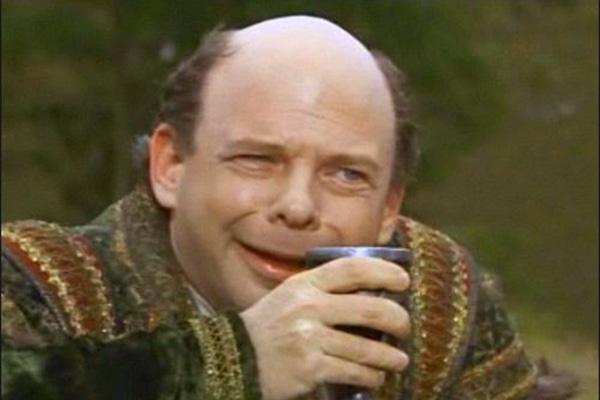
Vizzini: Never get involved in a land war in Asia.
  
Martin Hill Ortiz is the author of Never Kill A Friend, Ransom Note Press.


Never Kill A Friend, Ransom Note Press

Never Kill A Friend is available for purchase in hard cover format and as an ebook.
The story follows Shelley Krieg, an African-American detective for the Washington DC Metro PD as she tries to undo a wrong which sent an innocent teenager to prison.

Hard cover: Amazon US
Kindle: Amazon US
Hard cover: Amazon UK
Kindle: Amazon UK
Barnes and Noble 

Martin Hill Ortiz is also the author of A Predator's Game. His epic poem, Two Mistakes, recently won second place in the Margaret Reid/Tom Howard Poetry Competition. He can be contacted at mdhillortiz@gmail.com.


Friday, September 28, 2018

The War of the Sexes and the Blindness to Sexual Violence.

Image result for dr. ford

The recent appearance of Dr. Ford before the U.S. Senate inspired this mix of thoughts which I've been churning in the cement barrel of my brain.


Part One. General Psychological Mutterings.

#1. Individuals tend to see themselves and their actions as reasonable. This is due to the fact that they know what thoughts went into their decisions.

#2. People tend to see the actions of others as mysterious or wrong. They don't know what went into the decisions.

#2a. The exception to rule two is when the actions of others are similar to those we would make. Because of this, cultures tend to view their way of doing things as the reasonable one.

#3. Rule 2a extends to people who share similar looks or share the same background. Part of the reason for this is perspective: aspects of race, gender and background extend to culture, i.e., this is how we do things. Part of this is due to an ease and willingness to accept the viewpoints of ourselves and to separate out a group of "others."

Part Two: Applying this to Politics.

#1. The British Empire saw themselves as reasonable. They were a beacon unto the world and a civilizing force.

#2. The British Empire saw the Irish as ireful, war-like, belligerent, etc.

#3. During the 19th century the British Empire engaged in wars of acquisition and repression, including such crimes against humanity as the two Opium Wars and the invention of concentration camps in the second Boer War (1900).

#3a. In the meantime, the Irish had no foreign wars, only internal squabbles and were starved out of their homes by their absentee landlords, i.e., the British.

The point is not so much that the ruling class writes history, it's that the ruling class is blind to its own history. I suppose I should add a disclaimer that I am not suggesting the British Empire was all villain and that Ireland was all hero.

Part Three: Applying this to Male and Female Perspectives.

#1. In the United States, in cases where the culprit was identified, 90.3% of murderers are men. Not surprisingly, nearly 99% of the perpetrators of rape are men. For aggravated assault, the figure is 83%.

#2. In spite of this, men see themselves as the rational sex.

#3. Men hold most positions of power. Men dominate the national discourse.

#4. Ergo, men excuse their irrationality and even their violence. Even more than that, they are unwilling to see the consequences of their actions.

#4a. Although on a less grave note, I think a good example of this is in the film "Broadcast News." When the news ran an exposé on date rape, the otherwise sympathetic character Albert Altman (played by Albert Brooks) said, "You really blew the lid off of nookie." The women, in union, hissed at him: he didn't get it.

#5. As a general rule, men overlook and excuse their culture of violence toward women. This occurs for both large and small offenses.

#5a. Some men see it as a biological imperative. We as a species are hard-wired for war.


#5b. Some reflect back on their own actions and their own justifications.

For all the above reasons, men just don't get it.

It isn't merely hard-wired. It is also cultural. The United States has a homicide rate four times that of the United Kingdom. (5.35 versus 1.20 per 100,000).

We can change our culture, in fact, culture is always in flux. Homicides in the United States have dropped by 50% in the last twenty-five years. We can edit ourselves, to think beyond the prejudices of our narrow outlooks. Harm is not defined by the perpetrator; it is defined by the victim. We must use other eyes to see.