Showing posts with label Tesla. Show all posts

Thursday, June 9, 2016

The Modern Wonders of the World, Circa 1912-1914

I've always been fascinated by old surveys. They were neither rigorous in their sampling techniques nor authoritative in their findings, but they do provide a window into the mind-set of a specific period of time.

August 1912, Popular Mechanics

In their August 1912 issue, Popular Mechanics presented a poll of 1000 scientists as to the seven greatest achievements of the modern world. Fifty-six options were presented. Those that scored the highest:

1. Wireless telegraphy.
2. Telephone.
3. Aeroplane.
4. Radium.
5. Antiseptics and antitoxins.
6. Spectrum analysis.
7. X-ray.

The runners-up were also noted.
8. Panama Canal. (incomplete at that time).
9. Anesthesia.
10. Synthetic chemistry.

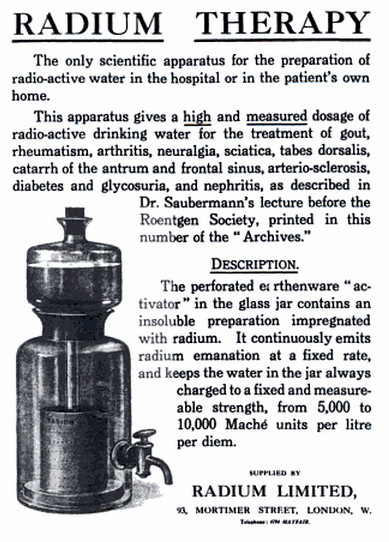
Comments: Radium showed up in all the polls presented here. At the time, the element was considered to have almost magical powers. Beyond being a substance which exuded warmth and light, radiation was shown to be legitimately useful in treating several diseases. Its curing powers proved to be greatly exaggerated and its dangers underestimated. The value of spectrum analysis was far-sighted, an important discovery for several fields. The aeroplane which showed up in all these polls, must have come across as a marvel, although it was hardly practical at the time. Among these, Tesla made important contributions to "the wireless" and to X-rays.

The promise of radium

In February, 1914 (well before the drumbeats of war), the Berlin newspaper Local Anzeiger ran a readership poll of the top seven wonders of the modern world.

They received 150,000 votes. They chose:

1. Wireless.
2. Panama Canal.
3. Dirigible.
4. Aeroplane.
5. Radium.
6. Motion pictures.
7. The passenger ship, Imperator.

A couple of notes. German pride shows up in the dirigible and the Imperator. The latter had been launched in June, 1913 and was for a brief period the longest ship in the world.

One month later, in March, 1914, the Paris newspaper, Le Martin, had a similar poll. The results, as reported in The New York Times:

1. Aeroplane.
2. Wireless.
3. Radium.
4. Locomotive.
5. Grafts of human bones and organs.
6. Diphtheria serum.
7. Electric dynamo.

Runners up, in order:
8. Telephone.
9. Cinematograph.
10. X-rays.
11. Telegraph.
12. Eiffel Tower.
13. Cold storage.
14. Antiseptic surgery.
15. Reaching the North and South Pole.

Notes: Due to organ rejection, the grafting of human bones and organs was not successful until the 1950s. One prominent doctor who worked in this field, Alexis Carrel, won a Nobel Prize in Medicine in 1912 mostly for his work in developing techniques to suture blood vessels. Many of the other choices were insightful and easily underappreciated, such as cold storage and antiseptic surgery. Beyond contributions to other fields, Tesla is represented in this list for the electric dynamo. (from: Modern World Wonders. March 15, 1914, New York Times, p. C2)

In November 1913, Scientific American presented the results of a contest soliciting the best essay which described the ten most important inventions. Although limited to devices and patentable discoveries of last 25 years, these rules were broken, some are more than 25 years old and some were not patentable. Along with the winning essays, the selections from all entries were ranked by the percent of lists in which they were included.

1. Wireless telegraphy 97%
2. Aeroplane 75%
3. X-ray machine 74%
4. Automobile 66%
5. Motion pictures 63%
6. Reinforced concrete 37%
6. Phonograph 37%
8. Incandescent electric lamp 35%
9. Steam turbine 34%
10. Electric car 34%
11. Calculating machine 33%
12. Internal combustion machine 33%
13. Radium 27%
14. Submarine boats 24%
14. Picture telegraphy 24%
16. Electric furnace 21%
17. Diesel engine 18%
18. Color photography 17%
19. Dictograph 16%
20. Composing machine 15%
20. Transmission and transforming of alternating current 15%
20. Pneumatic tire 15%
23. Dirigible 13%
23. Photo-engraving 13%
24. Tungsten lightbulb 11%
25. Electric welding 10%
25. High speed steel 10%

The first-place essay listed the Tesla induction motor as being eighth among ten choices, saying, "This epoch-making invention is mainly responsible for the present large and increasing use of electricity in the industries."

The complete list in the winning essay.

1. The electric furnace (1889).
2. The steam turbine (1884) Charles Parsons.
3. The gasoline-powered automobile (1889) Gottlieb Daimler.
4. The moving picture, attributed to Edison.
5. The airplane.
6. Wireless telegraphy.
7. The cyanide process for extracting gold.
8. The Tesla induction motor.
9. The Linotype machine, Ottmar Mergenthaler.
10. The electric welder, attributed to Elihu Thomson.

(This list was derived from the 2013 revisiting of the original article as presented by The Scientific American.)

Note: Although not the Scientific American, some of these lists asked for the wonders of the modern world. By that standard I would choose the Linotype machine. It was monstrous, crazy in its complexity, and changed printing more than any other invention since Gutenberg. It was a typewriter which boiled its own lead to cast printed text into lines to make printing plates. It allowed newspapers to expand beyond eight pages.

These lists are fascinating in that they give context to Tesla's work. The electric furnace needed lots of cheap energy to be generally useful. That energy was provide by the Tesla A/C generator, quite often in combination with the Parsons steam turbine. The availability of electric energy contributed to the success of electric welding, the Linotype machine and, of course, the induction motor.

Linotype Machine


-----

Nikola Tesla, Arthur Conan Doyle and Dr. Henry H. Holmes are all characters in my thriller, A Predator's Game.

A Predator's Game is available in soft-cover and ebook through Amazon and other online retailers.


A Predator's Game, now available, Rook's Page Publishing.

 -----------------------

Back page blurb.

Manhattan, 1896.

When the author Arthur Conan Doyle meets Nikola Tesla he finds a tall, thin genius with a photographic memory and a keen eye, and recognizes in the eccentric inventor the embodiment of his creation, Sherlock. Together, they team up to take on an "evil Holmes." Multi-murderer Dr. Henry H. Holmes has escaped execution and is unleashing a reign of terror upon the metropolis. Set in the late nineteenth century in a world of modern marvels, danger and invention, Conan Doyle and Tesla engage the madman in a deadly game of wits.

Martin Hill Ortiz, also writing under the name, Martin Hill, is the author of A Predatory Mind. Its sequel, set in 1890s Manhattan and titled A Predator's Game, features Nikola Tesla as detective.

Tuesday, June 7, 2016

Tesla Versus Hitler

Tesla could be imperious and condescending. In his later years he spoke favorably of eugenics. Although he regularly spoke favorably of all mankind, he made occasional anti-Semitic remarks.  He was, however, consistently anti-Nazi, supporting the anti-Nazi leaders of his homeland.


Tesla was born in what was then a part of Austrian-Hungarian empire. Like many Serbians, he did not have a fondness for the emperor. When he was drafted, he skipped out, hiding in the hills. He would later state his father had taught him a hatred toward war.

The Austrian-Hungarian empire dissolved during World War I. After the war, in 1918, the treaty of Versailles created the Kingdom of Serbs, Croats and Slovenes. In 1929, King Alexander I assumed power and renamed the country, Yugoslavia. Alexander opposed the actions of the rising powers of Italy, Germany and the Soviet Union. He was killed by Croatian fascists in 1934. At the time of this assassination, Tesla wrote to the New York Times describing King Alexander as “both the Washington and Lincoln of the Yugoslavs." His son, King Peter II, was the official heir to the throne but only eleven years old so in the interim Prince Paul, head of the regency council, held sway. This continued until March 25, 1941 when Prince Paul signed a treaty supporting Hitler and offering his countrymen as soldiers for military service. Two days later, Prince Paul was thrown out in a coup and replaced by the then 17-year-old, King Peter II.

Tesla's homeland paid dearly for standing up to the fascists. Beginning April 6th, the Luftwaffe attacked Belgrade killing 25,000 civilians. After eleven days, Yugoslavia fell and 300,000 soldiers were taken prisoner. In attacking Yugoslavia, Hitler postponed Operation Barbarossa, the invasion of Russia. This delay may have helped prevent Germany from achieving victory before the onset of the Russian winter. Yugoslavia acted as a sacrificial lamb.

In July 1942, a sickly Tesla met with King Peter II, the latter in exile.

King Peter, of Jugoslavia, 19 [sic, 18], and Nikola Tesla, 86 [sic, 84, turning 85], a fellow-countryman and world-famous scientist credited with 700 inventions, wept over the fate of their country when they met yesterday. (King, Scientist Weep Over Jugoslavia. July 9, 1942, Richmond Times Dispatch, p. 2)

The Down-Side of Tesla

Tesla's anti-Semitic remarks.

One quote attributed to Tesla is: "Never trust a Jew." This comes from Margaret Cheney's Man Out of Time. It is said to have been whispered to a secretary. Cheney comments, "Tesla's anti-Semitism appears sporadic and was unusual among gentiles of his time," perhaps meaning, unusual in only being sporadic. (Man Out of Time, Margaret Cheney, Touchstone, 2001, p. 165)

George Sylvester Viereck

In 1915, one year after the beginning of World War I, a newspaper interviewed fourteen individuals including military experts, experts in international affairs, editors, and inventors as to when they believed the war would end. (Salt Lake Telegram, July 29, 1915, p. 10) Among these, Nikola Tesla made the closest estimation, saying four years. The war would last another three years and three months.

Among the others interviewed was George S. Viereck, described as "Editor of 'The Fatherland' and ardent promoter of the German-American point of view." At this time, America was not at war, so his propaganda was not illegal. He predicted three more months for the conflict.

George Sylvester Viereck has been described as a playboy, gadabout, poet, journalist, and editor. He was the author of a popular vampire novel. He was most famous, however, for two things: German propaganda and latching on to the famous.

From the 1920s on through the 1930s Viereck interviewed a number of the best-known individuals of the time, including Hitler, Mussolini, Ford, Freud and Einstein. If that seems like an incongruous group, it is even more remarkable that Viereck promoted these individuals with equal enthusiasm.

Viereck's interactions went beyond journalism. So, while he did interview Einstein both for a book (Glimpses of the Great, Macauley, April 1930) and a newspaper story (Einstein Explains the Fourth Dimension, Cleveland Plain Dealer, December 21, 1930, p. 30), he also accompanied Einstein to the opera during Einstein's 1930 visit to New York (Einstein Praised from Half Dozen New York Pulpits, Tampa Tribune, December 15, 1930. p. 7). Viereck stated that he had an ongoing correspondence with Einstein. While it is most likely that Einstein did not know of Viereck's history or predilections, Viereck clearly did.

Was Viereck a shape-shifting groupie? He certainly seemed to be the ultimate name-dropper. In an interview with Arthur Conan Doyle, he mentions his conversations with Einstein, George Bernard Shaw, (Nobel Prize-winning poet) Gerhart Hauptmann, and Henry Ford. In the interview with Hitler:

Hitler: "Moral and physical health are synonymous."
"Mussolini," I [Viereck] interjected, "said the same to me." Hitler beamed.

As to where Viereck's sympathies lay, a story from 1934 removed any doubt:

"George Sylvester Viereck noted journalist and friend of former German Kaiser, is sworn in as witness at congressional committee hearing in New York into Nazi activities in U.S. Viereck admitted payments for propaganda advice and expressed great admiration for Chancellor Hitler." (Admires Hitler. The Evening Tribune, San Diego, July 18, 1934, p. 10).

In his late seventies Nikola Tesla gave an interview with Viereck. In it, Tesla expressed support for eugenics. He recommended that the "unfit" not be allowed to marry or breed, but did not detail who the unfit were. "Certainly no one who is not a desirable parent should be permitted to produce progeny." (February 9, 1935, Liberty Magazine)

The anti-Semitic remarks and the eugenic remarks sadden me. Tesla through his life in 99% of opportunities made declarations expressing a love for humanity, indeed, of dedicating his life's work to humankind. In the Liberty Magazine interview, I would like to think he was an old man manipulated by Viereck, a master manipulator, but maybe I'm bending too far in wishful esteem for Tesla.

During World War II, Viereck was tried and convicted for his ongoing efforts at Nazi propaganda. In one of his schemes, he used $250,000 in Congressional franking privileges (free mailing allowed to members of Congress) to send out German propaganda. The Congressmen, including the isolationist Hamilton Fish, said that they did not know of his efforts and he had put words into their mouths, placing Senator Lundeen's (MN) name on Viereck's writing. (Viereck, Nazi Agent, Guilty, March 6, 1942, Boston Herald)

George S. Viereck

And, Of Course, a Dig at Edison.

It does not excuse Tesla, but as part of the great Edison-Tesla debate, Edison spoke favorably and at much greater length about eugenics and, in his later years, expressed an admiration for Mussolini.

 "I [Edison] understand that a chair of eugenics has been established in one of the Eastern schools, and I think this is a wise move. The people should know more on that subject. Society must certainly protect itself. Science is doing much to this end." (The American to Be the Perfect World Type September 8, 1911 Seattle Daily Times, p. 19)

"There are three means which lie ready at hand; three sciences which lend themselves to our task; three tools with which we shape the Super Race. They are: 1. Eugenics -- the science of race culture. 2. Social adjustment -- the science of molding institutions. 3. Education -- the science of human development." (Americans of the Future to be the "Super Race," March 31, 1912. Portland Oregonian, p. 3)

And, from 1931, in the midst of the Depression, "Mr. Edison declared Prohibition was succeeding and asserted that the administration of President Hoover was a success. . . . "Mussolini is a man of great executive ability and probably a great man for the Italians." (Edison Sees Better Times. Boston Herald, February 12, 1931, p. 17)

 -----

Nikola Tesla, Arthur Conan Doyle and Dr. Henry H. Holmes are all characters in my thriller, A Predator's Game.

A Predator's Game is available in soft-cover and ebook through Amazon and other online retailers.


A Predator's Game, now available, Rook's Page Publishing.

 -----------------------

Back page blurb.

Manhattan, 1896.

When the author Arthur Conan Doyle meets Nikola Tesla he finds a tall, thin genius with a photographic memory and a keen eye, and recognizes in the eccentric inventor the embodiment of his creation, Sherlock. Together, they team up to take on an "evil Holmes." Multi-murderer Dr. Henry H. Holmes has escaped execution and is unleashing a reign of terror upon the metropolis. Set in the late nineteenth century in a world of modern marvels, danger and invention, Conan Doyle and Tesla engage the madman in a deadly game of wits.

Martin Hill Ortiz, also writing under the name, Martin Hill, is the author of A Predatory Mind. Its sequel, set in 1890s Manhattan and titled A Predator's Game, features Nikola Tesla as detective.


Saturday, June 4, 2016

Tesla Versus Edison

In the past months, I have written a series of Tesla Versus . . . posts. And now for the biggie:

Tesla Versus Edison.

Previously:


I have avoided Tesla versus Edison, in part because the subject matter is huge. A hefty book could be written and several medium-sized books have been written about "The Current Wars" of the late 1880s and early 1890s.


In this entry, I will attempt to provide the major events in the history of the rivalry between Tesla and Edison, toss in a few well-known and some less-commonly cited anecdotes and offer my opinion on the subject.

Background.

Thomas Alva Edison was born on February 11, 1847 in Milan, Ohio. He began inventing while working as a telegraph operator, creating automated telegraph devices. He later said that he had begun 18 hour work days from the age of twenty. In an interview at age 46, he described himself as 84 years old, having worked double the hours of others from the past 26 years. (Future Work of Edison. February 5, 1893 Omaha World-Herald, p. 5 - interestingly, he would die at 84.) Long hours were a key to his success, relentlessly tackling his creations with a blunt force and a well-staffed laboratory.

He considered his greatest creation to be the phonograph and he was probably correct in this. His patents for electric light-bulbs and many other inventions were incremental or moderate leaps forward. The phonograph was wholly original.

Nikola Tesla was born July 10, 1857 in what is now Croatia. He shared Edison's philosophy of long hours and little sleep. In nearly all other matters they were opposites. While Tesla dressed elegantly, spoke appreciatively of poetry and arts and became a toast of society, Edison slept in his clothes on a bench nearby his work, seeing no need for the pleasantries of life. Tesla imagined his inventions and strove to first perfect them in his mind. Edison had no patience for that, instead tinkering with them until something worked.

Tesla was an idealist. Edison was the ultimate pragmatist. Tesla made a poor businessman; Edison helped found General Electric (originally Edison General Electric) and one of the first motion picture companies (among many other endeavors).

The 1880s: Collaboration and Rivalry.

Nikola Tesla began working at the Société Electric Edison while in Paris in 1882, designing dynamos for Edison lighting systems (Tesla: Inventor of the Electrical Age, W. Bernard Carlson, 2013, p. 64). Tesla's work there was appreciated but he could not gain support for creating his own dynamo.

Tesla received a letter of introduction to Edison from Tivadar Puskás, the man entrusted to introduce Edison's patents to Europe. He wrote: "I know two great men and you are one of them; the other is this young man." (Carlson, p. 61)

Having been robbed on his way over, on June 6, 1884, Tesla arrived in New York penniless. When he passed immigration, a clerk told him: "Kiss the Bible. Twenty cents!" (Carlson p. 69)

Tesla began his American career at Edison Machine Works. Within the month, Edison had patented an arc lighting system based mainly on Tesla's work. Tesla described his time there in his autobiography:

For nearly a year my regular hours were from 10:30 A.M. until 5 o'clock the next morning without a day's exception. Edison said to me, "I have had many hard working assistants, but you take the cake." During this period I designed twenty-four different types of standard machines with short cores and uniform pattern, which replaced the old ones. The Manager had promised me fifty thousand dollars on the completion of this task, but it turned out to be a practical joke. This gave me a painful shock and I resigned my position. (My Inventions: The Autobiography of Nikola Tesla. Nikola Tesla and Ben Johnston. 1919)

After Tesla quit, he spent 1885 working for a company redesigning arc light systems. For his efforts, he was left with worthless stock. In the coming winter of 1885/1886, he dug ditches.

In 1886, the foreman of the ditch diggers introduced him to two men who would become sponsors for his ideas to create alternating current generators: Alfred S. Brown and Charles F. Peck. In 1887, the Tesla Electric Company was formed and over the coming year two of his greatest patents were completed: the A/C generator and the A/C motor.

While both were revolutionary, this contemporary description of the A/C motor describes the wonderment:

D.J. Cable, a well-known electrician of this city, examine the completed motor. He was very much pleased, and in speaking of it to a reporter, said: "Mr. Tesla deserves credit for all he has accomplished. He has worked out what no other man has before him, and has produced in fact a motor which some eminent electricians claimed was impractical and beyond reason. ...

"Its simplicity and cheapness are remarkable. Any number of them with great capacity to do work can be attached to an electric light line, if the dynamos are large enough. With two simple wires connecting the motor with the wire that supplies a common electric light, a manufacturer will have power enough to run his machinery, and the steam engine he uses now can be relegated to back to obscurity. It is a great saving of time, labor and money." (A New Motor. San Francisco Chronicle, August 23, 1888)

Tesla's A/C system was better than the system of DC generators and batteries Edison's company put forward. George Westinghouse took note. Westinghouse bought out Tesla and his inventions at a high price. A contemporary report summed up the consolidations and oncoming rivalry:

The Westinghouse company was incorporated in 1886 and absorbed the Tesla Motor company, the Waterhouse Electric Company and leased the Sawyer & Man company, which owned the fundamental patents on incandescent lights.

"As matters now stand," continued Mr. Curtis [lawyer for Westinghouse], "there are only two great companies face to face in this country now. These are the Westinghouse and the Edison." (Absorbed by Westinghouse. February 12, 1889. New York Herald, p. 11)

Edison saw Tesla's system as dangerous and impractical and "not worth the attention of practical men." (Carlson p. 90)

On April 24, 1889, Edison's several companies merged through the financing of Anthony J. Drexel and J.P. Morgan to form Edison General Electric.

Even as the mergers were finalized, the electric current wars were underway.

The Electric Current Wars.

In retrospect, powering a major city by batteries seems ludicrous. Even then, it was impractical, but Edison had invested a lot of money in this scheme.

Edison undertook a variety of underhanded means to persuade the public that direct current was the only reasonable and safe way to go. He lobbied state legislators and regulatory agencies asking to ban or limit A/C. He sponsored public electrocutions of animals. He helped promote the electric chair as a means of executing criminals emphasizing its lethality while claiming that it was pain-free.

On June 5, 1888, Harold J. Brown, a freelance electrical engineer of no great renown, wrote a letter to the editor of the New York Evening Post warning of the great dangers of alternating current. He quickly became Edison's surrogate electrocutionist. Although Brown claimed his crusade "represented no company and no financial interest," Edison made available to Brown a work-space in his laboratory and provided the services of Arthur Kennelly, Edison's chief electrician, for Brown's demonstrations. (the quotes and story in this section are from Empires of Light: Edison, Tesla, Westinghouse and the Race to Electrify the World. Jill Jonnes, 2003.)

Brown declared he would prove the dangers of alternating current and sent out engraved invitations to a presentation at the Columbia College, School of Mines, for the evening of July 30, 1888. This "proof" came in the form of electrocuting a dog, first with several levels of DC in which the dog writhed in agony, then by AC which killed off the dog. The audience was horrified: not by the fearsome power of AC, but by the cruelty of the demonstrator. Some walked out. A reporter stood up and called out his objection to the torture. Brown declared the demonstration a success and said "the only places where an alternating current ought to be used were the dog pound, the slaughter house, and the state prison."

Four days later, Brown repeated the demonstration, this time with three dogs. One of them took four minutes of electric shock to die.

Then Edison and Brown upped the ante. They decided to execute large animals to establish that alternating current was the most efficient means of electrocuting humans to carry out executions.

On December 5, 1888, Brown rigged an electrocution pen at the Edison research complex in West Orange, New Jersey. Along with representatives of the New York State Death Commission and American Society for the Prevention of Cruelty to Animals, Edison himself attended. They executed two calves and a full-grown horse. Brown was soon hired to construct an electric chair.

https://upload.wikimedia.org/wikipedia/commons/a/a8/Harold_Pitney_Brown_edison_electrocute_horse_1888_New_York_Medico-Legal_Journal_vol_6_issue_4.png
A Victim of the Current Wars


The first criminal set to be executed by electricity was the murderer Harry Kemmler. The novel means of his execution became a basis for appeals and Edison testified in court as to the instantaneous and painless nature of electrocution, while also providing lurid descriptions of what alternating current could do to a human (and at the same time making it clear he didn't know what he was talking about). He said that several thousand horsepower would be sufficient to carbonize a man. "His temperature would rise 3 or 4 degrees above the normal and after a while he'd be mummified. . . . The heat would evaporate all the fluids in his body and he'd be mummyized."


On August 6, 1890, Kemmler was executed in what proved to be a horrifying mess, with the victim being pronounced dead then found alive. The current was turned on a second time trying to instill death. All in all, it took eight minutes. Westinghouse commented. "They could have done it better with an axe."

What ultimately doomed the Edison side is that their system was more prone to fires, it was more expensive and less generally useful. It could not transport electricity for anything but short distances.

In February of 1892, the Edison General Electric company merged with Thomson-Houston Electric and the Thomson-Houston management took over. Edison's name was dropped from the company, now becoming General Electric. J.P. Morgan financed this takeover, not bothering to notify Edison that he was about to be removed. Morgan had screwed Edison the way he would later become a nemesis of Tesla.

Edison spent much of the rest of the 1890s working on his most futile long-term venture: mining iron ore in New Jersey.

The New Edison.

By the mid-1890s the current wars had ended. Tesla who had spent the winter of 1886 digging ditches had defeated the most prominent inventor of his generation (and perhaps the most prominent American). Tesla was the toast of the town, indeed, the toast of the nation.

A new Edison has appeared in the person Nikola Tesla, who has come to the United States from Servia to work still greater revolutions in the wonderful application of electricity. (A New Edison. March 21, 1894 Tacoma Daily News, p. 2)

Beyond the Current Wars.

Although Edison did not write an autobiography, his official biography came at age 60. In it, Tesla was only mentioned in passing, first in a pair of anecdotes, one mentioning how hard Tesla worked and one mentioning how much Tesla ate at a meal. Tesla was also mentioned  in the recounting of play that parodied Edison and Tesla and how they might approach the Spanish-American war.

 From: Clank—Clank, the Cranks are Clanking.

"Mr. Edison (proudly): 'It is done! I have filled these lobsters so full of electricity that they buzz when they move. When the Spanish warships come in sight I will turn 'em loose in the bay, and then you'll see what you will see. These lobsters will establish a current with a line of electric eels that I have stationed at Sandy Hook, and the haughty hidalgos will get a shock that will make 'em look like twenty-nine cents marked down from forty.'

"The Crowd: 'Hooray! Cuba libre!'

"Mr. Tesla (interrupting the demonstration): 'That scheme won't do at all. Now, I have a fan here that is charged with four billion volts of Franklin's best brand of bottled lightning, and when this fan gets fanning the results are astounding. Not ten minutes ago I fanned a fly from off Emperor William's nose, and fluted the whiskers of the King of Siam. Now, when the Spaniards come up the bay I'll just climb a tree and pour a broadside of vibrations at 'em. Say, I'll fan 'em off the earth in not more than a minute and a half.' (As related in: Thomas Alva Edison: Sixty years of an inventor's life. By Francis Arthur Jones, 1907. p; 366-7.)

As has been noted in another post, a false report came out that Tesla and Edison were to share the 1915 Nobel Prize in Physics;

In 1916, Tesla became the seventh recipient of the Edison Medal, given out by the American Institute of Electrical Engineers. Cognizant of their long-term rivalry, at first Tesla was reluctant to accept the award. He acceded.

In his speech he contrasted his method of inventing with that of Edison and praised Edison for his single-mindedness.

I could do it all in my mind, and I did.  In this way I have unconsciously evolved what I consider a new method of materializing inventive concepts and ideas, which is exactly opposite to the purely experimental of which undoubtedly Edison is the greatest and most successful exponent. ...

[Of their first meeting:] I met Edison, and the effect he produced upon me was extraordinary.  When I saw this wonderful man, who had had no theoretical training at all, no advantages, who did all himself, getting great results by virtue of his industry and application, I felt mortified that I had squandered my life.  I had studied a dozen languages, delved in literature and art and had spent my best years in ruminating through libraries and reading all sorts of stuff that fell into my hands.  I thought to myself, what a terrible thing it was to have wasted my life in those useless efforts. (Excerpted from Nikola Tesla acceptance speech at the ceremony for the 1916 Edison award, May 18, 1917 as presented on the website, Twenty-First Century books)

Edison did not attend the ceremony.

In the 20s and 30s, having lived through the time of the devastation of the First World War, Edison and Tesla both considered what must be done to prevent another.

 "We should experiment with the most deadly gases and the biggest guns," he [Edison] said. "Not that we will ever make use of them, but so that we may be prepared in case some other nation, through rascality, should attack us. I want all nations to be prepared so that it will be so terrible that game is up."

(Edison, at 75, Says 15 More Birthdays Are Coming to Him. February 12, 1922. Philadelphia Inquirer, p. 12.)

Keep the nations of the world from obtaining money to prepare for "the next war." If this is done–and America has the power to do it–President Harding will succeed in the conference he has called for limitation of armament.

In that manner the situation was summed up today by Thomas A. Edison, Henry Ford and H.S. Firestone as they sat on the shady bank of a rippling West Virginia mountain brook, munched sandwiches, frizzled bacon and talked about disarmament, prosperity and golf.  (Advise Poverty As Only War Remedy. August 2, 1921. Salt Lake Telegram, p 20)

Tesla, in contrast, came to believe that defensive means were the only way to end war.

I inherited from my father, an erudite man who labored hard for peace, an ineradicable hatred of war. Like other inventors, I believed at one time that war could he stopped by making it more destructive. But I found that I was mistaken. I underestimated man's combative instinct, which it will take more than a century to breed out. We cannot abolish war by outlawing it. We cannot end it by disarming the strong. War can be stopped, not by making the strong weak but by making every nation, weak or strong, able to defend itself. (A Machine to End War. Liberty, February 1937 by Nikola Tesla as told to George Sylvester Viereck.)

End Note.

As I said at the beginning, this conflict could make up a very long book and some good ones have been written with parts of the tale. Many take Tesla's side as the battered idealist. Many see Edison as the evil opposite of Tesla.

I believe such a point of view is simplistic: Tesla was not a saint. Edison, however, did show himself in their battles to be petty. Between the two and considering their contributions to the modern age, I favor Tesla.

Other popular links which take Tesla or Edison's side:

Why Nikola Tesla was the greatest geek ever.
The response in Forbes:
Nikola Tesla wasn't God and Thomas Edison wasn't the devil.
and, for those interested:
The Tesla Vs. Edison Board Game.
-----

Nikola Tesla, Arthur Conan Doyle and Dr. Henry H. Holmes are all characters in my thriller, A Predator's Game.

A Predator's Game is available in soft-cover and ebook through Amazon and other online retailers.


A Predator's Game, now available, Rook's Page Publishing.

 -----------------------

Back page blurb.

Manhattan, 1896.

When the author Arthur Conan Doyle meets Nikola Tesla he finds a tall, thin genius with a photographic memory and a keen eye, and recognizes in the eccentric inventor the embodiment of his creation, Sherlock. Together, they team up to take on an "evil Holmes." Multi-murderer Dr. Henry H. Holmes has escaped execution and is unleashing a reign of terror upon the metropolis. Set in the late nineteenth century in a world of modern marvels, danger and invention, Conan Doyle and Tesla engage the madman in a deadly game of wits.

Martin Hill Ortiz, also writing under the name, Martin Hill, is the author of A Predatory Mind. Its sequel, set in 1890s Manhattan and titled A Predator's Game, features Nikola Tesla as detective.

Thursday, May 5, 2016

Tesla Versus The Nobel Prize


The article as it ran in the November 6, 1915 Boston Journal.

On November 5th, 1915, the London Daily Telegraph made the announcement:

  The Swedish government has decided to distribute the Nobel prizes next week as follows:

  "Physics, Thomas A. Edison and Nikola Tesla; literature, Romain Rolland (French), Hendrik Pontoppidan (Swede); chemistry, Prof. Theodor Sveberg."


With Tesla and Edison being U.S. citizens, this announcement was picked up by newspapers all over America.

The story proved to be false. The British father and son team of William and William Lawrence Bragg won the prize for their work on X-ray crystallography. Tesla had not been nominated that year and would never win a Nobel Prize.

Although I had heard of this historical error, I did not realize how extensive and persistent it was. Even after the correct winners were announced, even after the Nobel Prize ceremony, Tesla continued to be named as the winner and named with a greater frequency than the Braggs.

Using an aggregator of American newspaper stories, over the months beginning with November 1915, 94 articles appeared in various newspapers  regarding Tesla and the Nobel Prize. (An additional 7 mentioned Edison as a winner without Tesla being named.)

Of these articles.
  • 51 came with the initial announcement. Clustering around November 5th/6th some of these articles presented Edison and Tesla as "possible" winners, while others were certain.
  • 10 belonged to a set beginning within a week. These were composed as a follow-up, talking with Tesla about his plans for and his visions of the future which included wireless telephone, lighting at sea, and wars without bombs.
  • A mere 7 articles mentioned Tesla did not win the prize. These began on November 13th and in each case mentioned the correct winners.
  • 19 cited Tesla as the winner of the Nobel prize while describing his patents for an electrical device to destroy bombs at a distance. These began December 8th, two days before the Nobel Prize ceremonies.Typical of these was a Boston Herald article dated, December 8th which began, "Nikola Tesla, the inventor, winner of the 1915 Nobel physics prize, has filed patent applications on the essential parts of a machine, the possibilities of which test a layman's imagination and promise a parallel of Thor's shooting. thunderbolts from the sky to punish those who angered the gods."
  • 3 cited Tesla as the winner of the Nobel prize while discussing Tesla's views on the elimination of war. These began January 30th, 1916.
  • 4 were miscellaneous, e.g., Nobel Prize given out tomorrow: Edison and Tesla are winners.

In contrast, the actual winners, William Bragg and his son, merited 22 articles.


Another way to look at this is:

  • 56 articles reported Tesla as receiving the Nobel Prize from the time of the announcement until the correction.
  • 7 articles correcting the error. (Additional articles reported the Braggs winning without correcting the previous error).
  • 13 articles reported Tesla as receiving the Nobel Prize from the time of correction up through the day of the ceremony.
  • 18 articles reported Tesla as receiving the Nobel Prize after the ceremony had taken place.

In contrast:
  • 14 articles reported the Braggs as receiving the Nobel Prize up to the time of the ceremony.
  • 8 articles reported the Braggs receiving the Nobel Prize after the ceremony. 


Thomas Edison was no rookie when it came to reports that he had won the Nobel Prize. On October 19, 1911, the Boston Herald ran a report with the headline: Edison Wins Nobel Prize for Physics. Similar articles ran in newspapers across the country. After the correction was made, Edison stated he would decline the award, anyhow: it was best given to an inventor early in his career who needed the money.

Some have suggested that Tesla and Edison were the original winners of the prize but that the recipients were changed due to Edison and Tesla's rivalry (or for other reasons). This did not happen. The nominations for the prize from 1915 have become available and Tesla's name was not among them. Furthermore, the initial report included several other recipients, all of whom failed to receive the award that year.

From an article in the Olympia Daily Recorder published 3 weeks after the Nobel Prize ceremony.
-----

Nikola Tesla, Arthur Conan Doyle and Dr. Henry H. Holmes are all characters in my thriller, A Predator's Game.

A Predator's Game is available in soft-cover and ebook through Amazon and other online retailers


A Predator's Game, now available, Rook's Page Publishing.

 -----------------------

Back page blurb.

Manhattan, 1896.

When the author Arthur Conan Doyle meets Nikola Tesla he finds a tall, thin genius with a photographic memory and a keen eye, and recognizes in the eccentric inventor the embodiment of his creation, Sherlock. Together, they team up to take on an "evil Holmes." Multi-murderer Dr. Henry H. Holmes has escaped execution and is unleashing a reign of terror upon the metropolis. Set in the late nineteenth century in a world of modern marvels, danger and invention, Conan Doyle and Tesla engage the madman in a deadly game of wits.

Martin Hill Ortiz, also writing under the name, Martin Hill, is the author of A Predatory Mind. Its sequel, set in 1890s Manhattan and titled A Predator's Game, features Nikola Tesla as detective.

Wednesday, April 27, 2016

Tesla Versus the Martians


In January, 1901, Nikola Tesla announced that he had received radio signals which he believed came from Mars. A brief message, the numbers 1,2,3, came to him during his 1899 experiments in Colorado Springs at the foot of Pike's Peak. "I share the belief of other scientific men that the planet Mars is inhabited; that the inhabitants are intelligent and they are trying to communicate with the inhabitants of other planets including our earth.  . . . While investigating, the instrument I was using recorded certain feeble movements that could be barely noted at times. Their character showed unmistakably that they were not of solar origin. Neither were they produced by any causes known to me on the globe. After months of deep thought on this subject I have arrived at the conviction, amounting to almost knowledge, that these movements must be of planetary origin. . . . Inhabitants of Mars, I believe, are trying to signal the Earth." [Tesla And Mars. January 4, 1901  Daily People, New York, p. 2]

This announcement was copied in newspapers throughout America, provoking wonderment by those who believed it dawned a new age -- and ridicule from skeptics. Over time, the announcement was used to denigrate Tesla, to show that he was delusional enough to believe in little green men. But, as for believing in communication with Mars, he was hardly alone in his notions.

Some Context.

In 1894, Percival Lowell, one of the foremost astronomers of the day, directed the high-powered refractory telescope he had set-up at an observatory in Flagstaff, Arizona toward Mars and announced that he detected canals, ergo, evidence of life. He published these findings in 1895 in a book called Mars.

Even more important in solidifying the public's impression of Martians was H.G. Wells' sensational, The War of the Worlds, serialized in 1897 and published in book form in 1898, in which malevolent Martians invade the earth.

Martian mania was fully underway. In the fanciful serial, Edison's Conquest of Mars, also 1898, the inventor collaborated with the greatest minds of the day to save Earth.


The salvation of Earth ". . .was due to a few dauntless men of science, conspicuous among whom were Lord Kelvin, the great English savant; Herr Roentgen, the discoverer of the famous X ray, and especially Thomas A. Edison, the American genius of science." Edison's Conquest of Mars, Garrett Putman Serviss.

Notably, Tesla was absent from the list.

Also, beginning in the mid-1890s for the first time in human history, mankind could communicate beyond visible and shouting distances without the use of wires. Tesla undertook experiments transmitting and detecting radio signals from site to site in Manhattan. In 1896, Marconi showed that radio could communicate across the Bristol Channel, approximately 14 kilometers, and in 1899, across the English Channel. These transmissions were in Morse code. Voice transmission would not take place until 1900.

The possibility of communicating with another planet seemed possible as Tesla noted in an 1896 interview. "I have had this scheme under consideration for five or six years . . . [noting that we have electrical disturbances from the sun shows that electrical waves are propagated through space.] It is wholly through the electricity waves, which are propagated through the atmosphere and the ether beyond that we may hope to obtain any results." [May Signal to Mars. March 25, 1896. New Haven Register, p. 7]

A later article suggests that it was terminology that prevented Tesla from equating "electric waves" with electromagnetic or radio waves. In referring to using electric waves to communicate with Mars, Tesla said: "The oscillator instantly transform this electric current, by a series of coils, into an electro-motive force, vibrating at the rate of 2,000,000 to 4,000,000 times a second. This starts electric waves through the air and earth, which vibrate almost as fast as the waves that produce light, and travel with the same speed. These waves, like X-rays, pass through any dense substance . . ." [May 21, 1899  Seattle Daily Times Page: 4]

Other stories combined Tesla's ideas with the recent advances in astronomical photography—and foreshadowed those who would suggest Tesla was crazy. "In reflecting on recent photographs of Mars taken from a telescope, the photographer Dr. Elmerdorf declared he would soon be able to pinpoint the cities on Mars." In defending this statement the newspaper went on to say, ". . . one can pardon the enthusiasm of an extremist by recalling that all great inventors were at one time "extremists," Edison was a "crazy man" for years; and Nicola Tesla, who spends a fraction of his time signalling to Mars is called "peculiar" by nine scientists out of ten." [Mars Looks Pleasant Caught by Camera, Springfield Sunday Journal, October 30, 1898]

Together, these set the scene for Tesla's announcement that he had received a communication with Mars.

After Tesla's 1901 Announcement.

Some, including the radio expert Guglielmo Marconi dismissed the idea. "In earlier experiments before my apparatus was perfected I often received signals apparently from nowhere. . . . I should attribute the alleged signals from Mars to local disturbances in the atmosphere. . ." [Possible Signals from Mars. Signor Marconi is Not Inclined to Believe in Them. January 5, 1901, Baltimore Sun p. 9]

Other skeptics weighed in, some with derision. A San Francisco Chronicle opinion piece accused Tesla of swindling. "Faker Tesla has evidently found a "good thing" in some one who is furnishing him with coin to carry on his alleged experiments to communicate with the planet Mars . . . Tesla seems to be as much of an adept in working the "graft" on the credulous with money as was the author of the Keeley motor." [January 22, 1901, San Francisco Chronicle, p. 6] (The Keeley motor was the standard for a con job for many years.)

Others took the announcement with bemusement:

And he [Tesla] promises the men (but this, of course, is just between us)
He will have a private line for them to whisper up to Venus.
Also one "For Women Only" he will put in very soon,
So the girls can all be talking to the man in the moon.
[June 11, 1901, Boston Herald, p. 11]

The Colorado Springs Gazette commented: "If there are people in Mars, they certainly showed most excellent taste in choosing Colorado Springs as the particular point on the earth's surface with which to open communications." [March 9, 1901, Colorado Springs Gazette (Colorado Springs, Colorado) p. 4]

Tesla assured the skeptics that he would soon be able to send messages to Mars and open up a dialogue. The world waited. As a January 12th, 1901 headline in The Philadelphia Inquirer read: All of Europe Talking of Signalling to Mars.

Tesla received his own treatment as a hero in a fictional adventure. The New Golden Hours magazine, March 30, 1901.
Alas, Tesla failed to open up a line of communication with Mars. In contrast, on December 12, 1901, Marconi sent the first wireless transmission across the Atlantic.

A month later, Tesla did not attend a dinner honoring Marconi held at the Waldorf-Astoria in New York. As one editorial suggested, "Possibly he may have had engagements with the people of the planet Mars that forbade his going." [January 15, 1902, Worcester Daily Spy, p. 6]

Tesla did have his supporters. "Now comes Professor Hough, the venerable astronomer of the Northwestern University with the announcement that in his opinion Mars is inhabited by a race much superior to the race which now inhabits the earth. As the Martians had a long start of us--Professor Hough believes that under the law of evolution they should be much more advanced intellectually and morally than we are." [September 19, 1902, San Jose Evening News, p. 4]

In 1903, Lowell reignited the argument that Mars was inhabited by claiming he saw bright flashes emanating from the planet.

Marconi Versus the Martians.


Beginning in 1919, Marconi went through several rounds of reporting that he had observed signals that may well have come from another planet. Some of his pronouncements were appended with uncertainty as to whether Mars was inhabited, others declared more certainty. This could well have been the phrasing of the reporting, a phenomenon which could equally have affected Tesla.

"Marconi, inventor of practical wireless, announces that he has received strange signals that did not originate on the earth. Nikola Tesla believes they may be messages from Mars. . . . Are the stars inhabited? The soundest affirmative argument is that nature is always efficient and that stars without folks would be extremely, inefficient, useless." [January 30, 1919, Wilkes-Barre Times, p. 12]

Marconi suggested that a mathematical language could be formed for the primary communication. He recommended the first message be: 2 + 2 = 4, and wait for a confirmation.

In a 1920 article, the inventor suggested these signals could be from the sun -- or a planet. ""We occasionally get very queer sounds and indications, which come from somewhere outside the earth," said Signor Marconi. "We have had them both in England and America. The Morse signal letters occur with much greater frequency than others, but we have never yet picked up anything could be translated into a definite message."

In 1922, when a particularly close alignment of Mars and Earth could allow for signaling, it was reported that Marconi was at sea, arranging just such an experiment. He denied that this was the purpose for his voyage.

The question continued to hound him. In 1934, three years before his death, he is quoted as saying, "I am frequently asked if it is within the range of probability that we may one day talk to Mars by radio. Why not? If there are beings on Mars at least as intelligent as we are, there is no reason why we should not one day communicate with them." [Marconi Thinks Mars Obtainable In Line Of Radio Communication. August 13, 1934, Springfield Republican, p. 5]

Edison (and others) Versus The Martians

It is unfortunate and unfair that Tesla alone was tarred by his statements amount communicating with Mars. Here is a sampling of others of the great scientist and inventors of the day.

Thomas Edison had his round of publicity regarding communication with Mars. From an interview on his 73rd birthday in 1920: "Asked what he was working on now, the inventor said he was not prepared to make any definite announcement, but his latest investigations had to do with ether. He said he believed radio communication with Mars to be possible. ... "Existing machinery is sufficiently strong to send a signal to Mars. The question is, have the beings there receiving apparatus delicate enough to get our signals?" [Thomas A. Edison Warmly Greeted On 73d Birthday. February 12, 1920, Harrisburg Patriot, p. 8.]

On the occasion of his 74th birthday Edison announced working on an immortality machine and continuing to work on a radio to talk to Mars. "'. . . the life units which form a man do not die. They pass out of one important mechanism to seek another habitat. I believe that one hundred trillion entities go to make up a single man; twenty billion cells each consisting of a commune of 5000 entities. . . . The device is of the nature of a valve, and the slightest conceivable amount of energy exerted on it is multiplied many times. . . .' Next to the immortality machine in importance comes a radio invention by which Edison hopes to make possible communication with Mars." [Edison at 74, Works on Machine to Prove That He'll Live Forever. February 11, 1921, Cincinnati Post, p. 6] The immortality machine also mirrors some of Tesla's wilder pursuits in his later life.


Years before, in praise of Edison, Lord Kelvin said, ". . . Edison brought out his lamp here in New York, and the whole world was lit. New York is the only spot on earth that Mars sees. Mars is signalling only to New York." [Mars Signals New York. June 1, 1902 Macon Telegraph p.14]

Charles Steinmetz declared that building a radio tower to signal Mars was feasible but would cost one billion dollars. [September 8, 1921 Muskegon Chronicle, p. 4]

-----

Nikola Tesla, Arthur Conan Doyle and Dr. Henry H. Holmes are all characters in my thriller, A Predator's Game.

A Predator's Game is available in soft-cover and ebook through Amazon and other online retailers.


A Predator's Game, now available, Rook's Page Publishing.

 -----------------------

Back page blurb.

Manhattan, 1896.

When the author Arthur Conan Doyle meets Nikola Tesla he finds a tall, thin genius with a photographic memory and a keen eye, and recognizes in the eccentric inventor the embodiment of his creation, Sherlock. Together, they team up to take on an "evil Holmes." Multi-murderer Dr. Henry H. Holmes has escaped execution and is unleashing a reign of terror upon the metropolis. Set in the late nineteenth century in a world of modern marvels, danger and invention, Conan Doyle and Tesla engage the madman in a deadly game of wits.

Martin Hill Ortiz, also writing under the name, Martin Hill, is the author of A Predatory Mind. Its sequel, set in 1890s Manhattan and titled A Predator's Game, features Nikola Tesla as detective.

Tuesday, March 22, 2016

First Chapter of A Predator's Game.

A Predator's Game 
Martin Hill Ortiz
2016, Rook's Page Publishing 

A Predator's Game is available in soft-cover and ebook editions through Amazon and other online retailers.


The First Chapter


       The man in the bowler hat stepped off the horse-drawn trolley. Overdressed for the sultriness of June, he wore a dark gabardine topcoat, its perfect tailoring drawn snugly over the muscular block of his shoulders. His shoes beamed from a recent shining, and his polished cufflinks winked in the midday sun. He clasped the whalebone grip of his walking cane, his thick-knuckled fingers clenching and unclenching in a strangling motion. Tipping his head back, he gazed skywards, beyond the valley of buildings, drinking in the sun until his eyes teared over. He then dipped his head down and surveyed the Eden Musée.
            Built with continental pretensions, the three-story dime museum presented a French Gothic façade with statues of plump ladies serving as columns. A decorative arch displayed a carving of sea nymphs. Its steep roof sloped over its third floor, plunging down to meet an ornamental railing. Garish streamers hung slung from window to window. A banner screamed in three-foot-tall letters: Open To All! Come Visit Our Chamber of Horrors!
Eden Musee
The Eden Musée at its most garish.

            The pompous building summed up everything Dr. Henry Holmes loved and loathed about Manhattan: hypocrisy inflated to a grand scale, with the high-minded fused to the tawdry. While crossing the street in front of Lord & Taylor's, society dames wearing feathered headdresses took dainty hops over lumps of horse manure. On Park Row and by City Hall, men in top hats bemoaned the plight of the poor while wringing every cent of change from the ragged newsies. Sulfurous clouds of coal dust drifted down from the belching steam engines of the elevated-above-it-all trains. Progress as the religion of heathens. Culture, yes, but as fake as a blush on a prostitute's cheeks.
            The doctor strolled into the lobby of the self-proclaimed “People's Museum.” The wax sculpture of a portly policeman flanked the ticket seller's booth, its glass eyes glistening. "Woe to ye pocket-pickers!" its placard read. "Our bluecoat is ever the vigilant." Holmes handed over a dime.
            A gypsy woman sat at the threshold of the entry hall, behind a narrow oak table. She wore a tent-like dress spacious enough to hide a nest of children. Her face was moon-round with large expressive eyes accentuated by bangles of sleeplessness. Her eyelids sparkled with blue glitter; her fake lashes flapped like the wings of a luna moth. Pancake make-up deadened the shine on her face. A parrot rested atop her suede shoulder patch, one of its legs was tethered by a lace to her wrist.

5¢. THE MYSTERIES OF THE FUTURE REVEALED. 5¢.
ALL FORTUNES GUARANTEED
MADAME GRENADINE KNOWS ALL!

            Access to a font of infinite knowledge proved impossible for Holmes to resist. He spun a five-cent piece on the tabletop.
liberty nickel
The Liberty Nickel

            The parrot hopped from the gypsy's shoulder, landing on the rim of a glass bowl where it bobbed its head down, plucking up two strips of folded paper. After shaking one loose, it dropped the other in front of the customer.
            Holmes unfolded his future, reading it aloud. "The challenges you will face may be overcome by determination." He crumpled it, grinding it into the palm of his fist. "Guaranteed?" His voice was ice-cold.
            "Yes," said the gypsy. "If you can demonstrate this fortune did not come to pass you may return to collect a full dollar."
            Holmes rolled a second nickel her way, Liberty's disembodied head tumbling chin over crown. With the gypsy's palm splayed flat and pressing the table, the coin slipped between the spread of her fingers and bumped to a stop.
            The parrot pounced into action, dipping again into the glass bowl and snatching up a second fortune, depositing it on the tabletop in front of Holmes.
            The doctor snapped up the folded paper and split open its crease with his thumb. Without looking down, he announced, "It tells me, I will eat this fucking bird for my dinner tonight." He smacked his lips. "Guaranteed."
            When the gypsy reached out to inspect the note, as quickly as a cobra strike, Holmes seized her wrist. His hand clamped down and twisted.
            If she felt pain, she refused to show it. They locked eyes: his alive and predatory, hers defiant, declaring she was too troublesome a mouse to swallow.
            She slipped her free hand into her bag, retrieved and set a silver dollar in front of Holmes. "The fortune speaks in error," she said.
            He let her go, broke a broad smile and inspected his earnings: a Morgan dollar, freshly minted, 1896. He seemed about to turn his shoulder when instead he quickly slapped his hand on the table, startling her. Lifting it, he revealed another nickel.
            The gypsy trembled. As her parrot bobbed, preparing to leap, she pinched its leather chain. Then she inhaled slowly, deeply, tipping back her head, rolling up her eyes, leaving only the whites. A hiss leaked between her rotting teeth. In a flash, her pupils returned. "This is your fortune," she declared. "You will kill again." She covered his nickel and scooted it her way.
            Holmes backed up, his eyebrows raised. He glanced to one side and then the other to see who else might have overheard. Satisfied that the exchange remained private, he nodded, offering a tip of his hat. "Which way to the Chamber of Horrors?" he asked.
                                                                           ***
            A domed skylight illuminated the Center Hall. The Rulers of the World, a waxwork diorama of monarchs, emperors and sheiks, lined the path to the entrance to the lower floor where a wide swath of steps scrolled down into a dark cave.
Rulers of the World
The Rulers of the World, in wax, Eden Musée.

           Mounted to the wall above the entryway to the pit was an ornamental clock. Its face a glowering caricature of the man in the moon; it wore a bandit's scarf as a mask. The clock hands appeared as two pistols pointed up, frozen at one minute to midnight. A sign beneath it warned entrants:
"The Lord So Cometh as a Thief in the Night."
            Holmes ambled down the stairs. Daylight faded; gas lamps bloomed. At the bottom of the steps a noose dangled in front of a mirror, providing visitors with a vision of their execution. Holmes viewed his head and neck through its loop. He adjusted his necktie.
            He considered his disfigured face. Months ago, as part of a scheme to escape the gallows, he clubbed his face beyond recognition. Now, as it healed, why did he hate it so much? This falseness, this new identity. The wiry rasp of his beard felt like a scouring pad sprouting from beneath his skin. The crumple of his shattered nose, the asymmetry of his cheekbones and ears, the prominence of his false front teeth: he snarled at his reflection. He had once been the handsome Dr. Jekyll. Now his features were those of the savage Mr. Hyde. A proper trimming: shave the beard, clip back the feral sideburns. Wash out the hair dye and plan a visit to a facial surgeon: he swore he would do everything he could to restore his previous looks. With the tip of his cane, he slapped the inside of the noose, setting it into motion with the sway of a pendulum.
            Upon entering the first crypt of the waxworks, Holmes found himself startled and infuriated. The Whitechapel Murders. The figure of a killer squatted over a victim, excavating her abdomen. A puddle of red wax spilled out over the fake cobblestones and dripped through a phony sewer grate. The placard declared: The Leather Apron Killer! Jack The Ripper! History's Foremost Archfiend! Five Women Mercilessly Slaughtered!
            Five? Holmes thought, seething. Only five murders places this "Ripper" at the fore? Holmes tried to think back to a year when he had killed only five.
            And this so-called fiend butchered whores! Where was the sport in that? Left to their own devices they'd destroy themselves in due time with booze or needles.
            Holmes had chosen as his victims, lovers, friends, associates and their children. In the desert of his emotionless life, his one great pleasure arose at the moment when his victims realized their betrayal, seeing Holmes for his true nature. Extinguishing the trustful expressions on their faces felt as soothing as a drink from a cool spring.
            The next chamber displayed Holmes himself: The Monster in Human Form! A wax figure of the doctor arched over eight-year-old Howard Pitezel, choking the child with his hands.
            I killed him with poison. Strangulation seems so... vulgar. Skin under the nails, the victim spitting, spindly arms and legs flailing like wildly flung rolling pins... and then all over so soon, no time to feast on the torment. And yet...
            Mimicking the pose, adding his hands to those around the child's neck, he felt a sensual satisfaction. Yes. He could imagine the joy of so intimate and quick a kill.
            A pair of onlookers scurried past his bent figure.
            The sculptor had given him brown eyes. Such shoddy attention to detail. His eyes had the blue-gray tremble of a mirage, the deception of an oasis. He stepped into the display and pressed his thumbs against the figure's glass eyes, driving them back into the hollow of its head. Holmes stepped back to admire the gouged sockets.
            Much improved.
            The final chamber of the cellar was devoted to a display of the novel device, the electric chair, showing the execution of William Kemmler.
            Electronic execution, electro-cution, that's what Edison named it.
Execution of Kemmler
The Execution of William Kemmler, correctly with two m's 

            Edison promoted the electric chair to aggravate his main rivals Westinghouse and Tesla—and to sell Edison's direct current as the only safe form of electricity. To expose the danger of alternating current, Edison undertook demonstrations executing animals, great and small, shocking them to death. Edison and his group followed up these presentations by championing the electric chair as a means of painless execution.
            The inaugural victim of this device was William Kemmler, the first human to be intentionally killed by electricity. Strapped down, soaked with salt water sponges to improve conduction, he was shocked and fried again and again in failed attempts to end his life. Westinghouse remarked that the execution would have gone more smoothly if they'd used an axe. And what had Tesla called the electric chair? A desecration of invention. A blasphemy.
            Tesla. Holmes ruminated on his memories of the man. Gangly-tall, smug, a genius who understands nothing. Tesla, who worships at the temple of progress. Tesla, who maintains a faith in the innocence of science.
            Nothing is innocent. Holmes had used one of Tesla's devices to aid in his escape and now Tesla alone knew he was still alive. Holmes had further use of that invention. He vowed to steal it and destroy its inventor.
            He gave me this life. The time has come to pay my creator a visit.

A Predator's Game will be available in paperback and electronic versions on March 30, 2016 from major retailers. Pre-order at Amazon.

The Inventor, the Author, and the Killer.

A Predator's Game

In my novel, A Predator's Game, the inventor Nikola Tesla serves in the role of Sherlock Holmes.


Manhattan, 1896.

When the author Arthur Conan Doyle meets Nikola Tesla he finds a tall, thin genius with a photographic memory and a keen eye, and recognizes in the eccentric inventor the embodiment of his creation, Sherlock. Together, they team up to take on an "evil Holmes." Multi-murderer Dr. Henry H. Holmes has escaped execution and is unleashing a reign of terror upon the metropolis. Set in the late nineteenth century in a world of modern marvels, danger and invention, Conan Doyle and Tesla engage the madman in a deadly game of wits.

In my first novel, A Predatory Mind, I included a backstory about an interaction between the famed inventor Nikola Tesla and the multi-murderer, Dr. Henry H. Holmes. After completing the book, I realized that Tesla and Holmes were the most interesting aspect of the novel and I decided to write a sequel* devoted entirely to a deadly battle of wits between the two with the conceit being that Holmes had escaped his May, 1896 hanging.

Manhattan in its gilded age became the backdrop.

I decided Tesla needed an ally. After playing with the idea of Mark Twain, a friend of the inventor, I happened upon another direction. Arthur Conan Doyle had visited New York in the mid-1890s (although not in 1896). Wouldn't it be perfect to have Conan Doyle battle an evil Holmes? As I explored the possibilities I had a revelation: Tesla was Sherlock Holmes. Physically, they are virtual twins. Mentally, they were geniuses of the highest order. In personality, both were imperious and cerebral and had little interest in worldly distractions such as money or women or the matters which we mere mortals call life.
The first chapter can be read here


A Predator's Game is available in soft-cover and ebook editions through Amazon and other online retailers.


A Predator's Game, now available, Rook's Page Publishing.

 -----------------------

Martin Hill Ortiz, also writing under the name, Martin Hill, is the author of A Predatory Mind. Its sequel, set in 1890s Manhattan and titled A Predator's Game, is available from Rook's Page Publishing.


His recent mystery, Never Kill A Friend, is available from Ransom Note Press. His epic poem, Two Mistakes, won second place in the 2015 Margaret Reid/Tom Howard Poetry Competition. He can be contacted at mdhillortiz@gmail.com.
Martin Hill Ortiz